Our Products

- ERP projects
An ERP (Enterprise Resource Planning) is a comprehensive management software that automates and centralizes a company's daily operations—such as finance, human resources, inventory, sales, and production—in a single database. Its main objective is to improve efficiency, reduce errors, and facilitate decision-making based on real-time information.

- MES projects
A Manufacturing Execution System (MES) is a software solution that monitors, tracks, and controls production processes in real time in the industrial plant. It acts as a bridge between planning (ERP) and machinery, optimizing efficiency from raw materials to finished products.
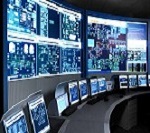
- SCADA projects
A SCADA (Supervisory Control and Data Acquisition) system is a combination of industrial hardware and software that allows for the monitoring, control, and collection of real-time data from processes and machinery. It centralizes plant operations from an HMI interface, optimizing efficiency and safety.
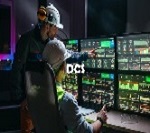
- DCS Projects
A DCS (Distributed Control System) is a computerized platform used to automate complex, continuous, or batch industrial processes. It centralizes operation through a human-machine interface (HMI) while decentralizing control across multiple local controllers, improving plant safety, reliability, and operational efficiency.
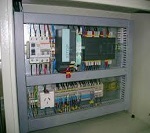
- PLC projects
A PLC (Programmable Logic Controller) is a robust industrial computer designed to automate electromechanical processes in manufacturing environments. It acts as the brain of the machinery, reading inputs (sensors), executing a logic program, and controlling outputs (motors, actuators) to manage production safely and efficiently.
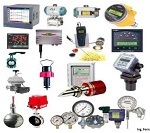
- Instrumentation Projects
Industrial instrumentation is the set of devices, sensors, and systems used to measure, convert, transmit, and control physical or chemical variables (pressure, temperature, level, flow) in production processes. Its purpose is to ensure the safety, quality, and automatic efficiency of production, optimizing resources and operations.
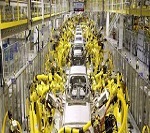
- Robotic Lines
A robotic assembly line is an automated production system where industrial robotic arms perform sequential tasks (welding, screwing, handling) on products along a conveyor belt. It uses advanced technology to operate 24/7 with high precision, speed, and consistent quality, reducing labor costs and increasing efficiency in sectors such as automotive and electronics.
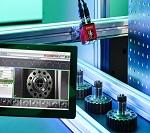
- Quality control stations with vision systems
A quality control station with vision systems is an automated workstation within a production line that uses industrial cameras, specialized lighting, and image processing software to inspect products in real time. Its main objective is to mimic human visual capabilities, but with greater speed, accuracy, and consistency, detecting defects, assembly errors, or dimensional deviations without stopping production.
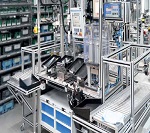
- Assembly lines
An assembly line is a sequential production process in which prefabricated parts are joined to create a finished product, moving through consecutive workstations. It uses conveyor belts to move the product, allowing each operator or robot to perform a specific and repetitive task, increasing speed and reducing time and costs.