Our Investments in Startups
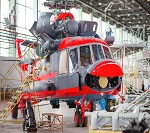
- Helicopter Manufacturing.
Front page.
Logo:
HMName:
Mexican HelicoptersPhrase:
Freedom in the chaotic city.Problem:
The helicopter manufacturing market currently faces a significant structural imbalance, characterized by growing demand versus limited production. Despite optimistic order forecasts, the industry is struggling with supply chain delays and geopolitical issues that limit the delivery capacity of new equipment.
- Current Manufacturing Problems:
- • Supply chain fragility: Disruptions in the supply of critical raw materials and components persist, creating bottlenecks on assembly lines. This situation forces manufacturers to reassess their production plans and keeps order backlogs 2 to 3 years or more behind schedule.
- • Shortage of skilled labor: The skilled human talent gap is expected to persist well into 2026, limiting the speed of production.
- • Problems with Russian helicopters: The war in Ukraine has blocked the supply chain of parts and maintenance services for Russian-made helicopters (such as the MI-17), forcing the air forces of several countries to keep aircraft grounded and seek alternative maintenance, affecting the operational readiness of their fleets.
- • Adoption of new technologies: The pressure to design more sustainable and low-emission helicopters, along with the emergence of eVTOLs (electric vertical takeoff and landing aircraft), is pressuring traditional manufacturers to invest in R&D and modify their production lines.
- • Lack of OEM parts: Faced with a shortage of original equipment manufacturer (OEM) parts, some militaries are turning to 3D printing and in-house manufacturing of components to keep their fleets operational.
- Market Problems and Challenges:
- • Supply-demand imbalance: There is an increase in customers (especially military) versus limited production, which has boosted the market for used helicopters and leasing.
- • High operating costs: High maintenance and fuel expenses remain a challenge for small operators.
- • Geopolitics and Defense: The increase in global defense budgets is driving demand, but geopolitical constraints are complicating the supply chain.
- • Sustainability and Regulation: Strict safety regulations and environmental challenges (noise and emissions) hinder the introduction of new products.
In summary, the industry is currently experiencing a period of strength in orders, but faces serious operational challenges in delivering aircraft on time, which keeps the value of the second-hand market high and necessitates creative maintenance solutions.
Solution:
The helicopter manufacturing industry in 2025-2026 is marked by a strong recovery, a shift towards sustainability, digitalization, and high demand for modernization in defense. The global helicopter market showed solid growth, with Airbus Helicopters leading with 51% of the civil and parapublic market in 2025.
- Current Solutions and Trends in Manufacturing:
- • Sustainability and Hybrid/Electric Propulsion: There is a clear trend towards reducing emissions through hybrid and electric propulsion systems, designed to improve operational efficiency and reduce fuel costs.
- • Digitization and Automation: Advanced computer technologies such as computer-aided design (CAD) and finite element analysis are used to create detailed three-dimensional models, allowing virtual testing before physical manufacturing (as in the case of the AH-64 Apache).
- • Composite Materials and Modular Design: Modern manufacturing employs composite materials (carbon fiber and glass) to improve lightness and durability. The modular approach facilitates maintenance and upgrades, especially in defense programs.
- • Enhanced Safety Systems: Robinson Helicopter has introduced innovations such as reinforced bird strike bubbles and new symmetrical horizontal stabilizers to improve safety on high-speed flights.
- • UAS and Autonomy: Airbus is integrating unmanned aerial systems (UAS) into its core operations, focusing on tactical drones and "HTeaming" capabilities (helicopter-drone teams).
- Market and Outlook 2025-2034:
- • Sustained Growth: The helicopter market, valued at approximately $90.8 billion in 2025, is expected to continue growing, reaching $100.7 billion by 2034.
- • North American and European dominance: These regions lead the market, with a share exceeding 54% in 2025, focusing on fleet renewal and military missions.
- • High Defense Demand: Airbus recorded 544 orders in 2025, with a 20% increase in both civil and military orders, highlighting the need for fleet renewal in defense and emergency services.
- • New Military Programs: Programs such as the "Future Vertical Lift" (FVL) in the US, including the Bell V-280 Valor, are reshaping the future of assault helicopters. In Europe, Airbus is promoting concepts for NATO's NGRC (Next Generation Rotorcraft Capabilities) program.
- • Supply Shortage: Demand is observed to exceed the production capacity of manufacturers (OEMs), increasing the importance of the used helicopter market.
- Main Manufacturers and Models:
Airbus Helicopters, Bell, Leonardo, Sikorsky (Boeing), and Robinson dominate the sector. Robinson dominates the piston-engine market, essential for training.
Potential market size (TAM, SAM, SOM):
The helicopter manufacturing market is a consolidated, high-tech aerospace sector with a strong military component, showing stabilization after the health crisis and moderate growth driven by fleet modernization and the emergency commercial sector.
Here is a detailed analysis of market size using the TAM, SAM, and SOM models (based on 2025-2026 projections):
- 1. Potential Market Size (TAM, SAM, SOM).
- • TAM (Total Addressable Market): It represents the global value of the entire helicopter industry (commercial, military, and related services). The global helicopter market is estimated to have reached $90.8 billion in 2025 and is expected to exceed $96.5 billion in 2026. Some sources focused exclusively on manufacturing place the TAM value of production at around $30-35 billion annually.
- • SAM (Serviceable Addressable Market): This refers to the portion of the TAM that applies to a specific manufacturer (e.g., commercial, military, or a geographic region). North America dominates this segment with 54.6% of the market share in 2025. The civil/commercial helicopter segment alone represents approximately $6.7 billion annually, growing at a rate of 4.3% through 2033.
- • SOM (Serviceable Obtainable Market): This is the realistic market share that the leading companies (Airbus, Bell, Leonardo, Boeing) will capture in the short term. By 2025, the leading manufacturers will control approximately 55.9% of the total market.
- ......o Example of leadership: Airbus Helicopters recorded 544 gross orders in 2025, maintaining a strong market leadership.
- 2. Proyecciones de Crecimiento
- • CAGR (Compound Annual Growth Rate): A CAGR of approximately 1.30% to 2.2% is projected for the overall helicopter market between 2026 and 2034.
- • Military Market: Drives much of the growth due to geopolitical tensions and modernization, with markets like North America focusing on advanced platforms.
- • Civil Market: Driven by Emergency Medical Services (EMS), search and rescue, and VIP transport.
- 3. Relevance and Trends of the Sector.
- • Military and Defense Domain: Most of the revenue comes from defense contracts (e.g., AH-64 Apache, UH-60 Blackhawk, Leonardo SpA platforms).
- • Emergency Medical Services (EMS): Increased urban congestion and population aging increase the demand for light and medium helicopters for medical evacuation.
- • Fleet Renewal: Many operators are replacing older aircraft with newer, more fuel-efficient models with greater medium/heavy cargo capacity.
- • Technological Innovation: Heavy investment is being made in autonomous aviation, hybrid technologies, and digitalization to reduce maintenance costs.
- • Geographic Importance in Manufacturing: Mexico is consolidating its position as a relevant center in the supply chain, being the tenth largest producer in the world and specializing in components, with expectations of growing by 14.7% by 2030.
- 4. Main Actors (SOM).
The market is fragmented but led by a few key players:
- • Airbus Helicopters (Leader in commercial and defense orders).
- • Bell Textron Inc. (High performance).
- • Leonardo S.p.A. (Advanced Rotorcraft and defense).
- • Boeing (Defense/Military).
- • Lockheed Martin Corporation(Sikorsky).
In summary, helicopter manufacturing is a $90+ billion market that is moving towards technological modernization, with critical relevance to national security and rapid response (EMS).
Market Opportunity:
The global helicopter manufacturing market is valued at over $90 billion by 2025, driven by military modernization, emergency medical services (EMS), and offshore demand. The greatest opportunities lie in twin-engine helicopters, autonomous technology, hybrid/electric models, and growth in the Asia-Pacific region.
- Key Market Opportunities (2026-2034):
- • Autonomous Helicopters and Air Mobility (UAM): Exponential growth is expected with a CAGR of 22% by 2033, led by UAM applications, surveillance, and logistics.
- • Civil/Commercial Segment: High demand in Emergency Medical Services (EMS), search and rescue (SAR), tourism and corporate transport.
- • Defense and Military: North America dominates with over 50% of the market due to fleet renewal and combat programs.
- • Electric and Hybrid Helicopters: New opportunities in low environmental impact solutions and reduced operating costs.
- • Cargo and Energy Services: High demand for medium and heavy cargo helicopters for support on oil platforms, infrastructure construction and offshore wind energy.
- Market Overview:
- • Regional Dominance: North America leads with 54.6% share in 2025.
- • Key Players: Airbus, Bell, Leonardo, Boeing and startups like Joby Aviation.
- • Trends: Increase in helicopter leasing and high need for pilot training.
Business Model:
The helicopter manufacturing business model is based on high technology, advanced engineering, and safety, focusing on aircraft sales, maintenance, spare parts, and training. Manufacturers typically diversify across civil, commercial, and military markets, utilizing composite materials and lightweight alloys, with a growing trend toward customization.
- Business Model Structure:
- • Value Proposition: To provide reliable, customized and safe vertical transportation solutions for specific missions (rescue, executive transport, military, training).
- • Customer Segments: Government/defense, air medical services companies, tourism, energy/mining sector and private owners.
- • Key Activities: Research and development (R&D), design, precision assembly, flight testing and certification.
- • Sources of Income:
- ......o Direct sale: New helicopters.
- ......o After-sales: Sale of spare parts, maintenance and repair services (MRO).
- ......o Services: Pilot and technician training, simulators.
- ......o Leasing: Leasing solutions for corporate clients.
- • Key Trends:
- ......o Technology: Development of tilting rotors (tiltrotor) for greater speed and versatility.
- ......o Sustainability: Exploration of hybrid or electric helicopters.
- ......o Payment Models: Fixed price schemes per flight hour to ensure maintenance efficiency.
- • Leading Manufacturers: Companies such as Airbus Helicopters (world leader with 48% market share) and Robinson Helicopter Company (light and training).
The industry requires a strong initial investment and is highly regulated, with a focus on constant innovation in materials and advanced avionics.
Traction:
Helicopter manufacturing and the aerospace market are undergoing a transformation driven by cutting-edge technology and specialized digital marketing strategies. The goal is to improve the safety, efficiency, and range of these aircraft, attracting commercial and government clients in a growing market.
The key trends are described here:
- Helicopter Manufacturing and Technology.
- • Innovation and Design: Companies like Robinson Helicopter focus on improving maneuverability with symmetrical horizontal stabilizers and greater component durability.
- • Enhanced Safety: The industry is implementing technology to withstand high-speed bird strikes, increasing safety beyond current regulations.
- • Hybrid and electric propulsion (eVTOL): Hybrid propulsion systems are being developed for greater efficiency and range, as well as electric vertical takeoff and landing aircraft for cargo and passenger transport.
- • Advanced Manufacturing: The use of 3D printing for critical components is becoming increasingly common, highlighting the alliances of Airbus and Boeing for high-strength parts.
- • Autonomous Drones (UAVs): The development of high-capacity cargo drones is on the rise for logistics and rescue missions, highlighting projects such as those of Grasshopper Air Mobility.
- Aerospace Digital Traction and Marketing.
- • Niche and Digital Marketing: Specialized SEO/SEM strategies are used for the aeronautical industry, focused on attracting high-level (B2B) clients.
- • Visual and aerial content: The use of drones to capture high-quality aerial shots is fundamental in modern digital advertising and marketing to differentiate campaigns.
- • Traction Strategies: "Traction" in this market is achieved through the demonstration of operational technology, safety certifications, and strategic alliances, such as Airbus's with Mahindra in India.
- • Social Media Marketing: Social media is used to showcase drone technology and conduct aerial "flash mobs," generating high interest.
- Market Trends.
- • The commercial helicopter market reached a significant value and is projected to maintain a steady compound annual growth rate (CAGR), driven by demand in transport and logistics services.
- • There is a focus on cutting-edge technological development, such as the transformable vehicle designed by Mexican scientists at the IPN.
The combination of manufacturing innovation (3D printing, new materials, hybrid propulsion) with digital marketing focused on aerial visibility and safety is key to gaining traction in this specialized sector.
Marketing and Sales:
The manufacture and sale of helicopters is a high-value niche market that requires sophisticated marketing strategies focused on trust, safety, customization, and performance, rather than mass advertising. Aircraft sales are based on long-term relationships and tangible demonstrations of value.
Here is a comprehensive strategy:
- 1. Marketing Strategy (Positioning and Visibility).
- • Target Segment Identification: Segmenting the market is crucial. Key clients include:
- .......o Commercial Operators: Passenger/cargo transport, emergency medical services (HEMS), patrolling.
- .......o Military and Government Clients: Defense, search and rescue (SAR), public safety.
- .......o Private/Corporate: Executive transport, luxury personal use.
- • High-Level Content Marketing: Develop technical content that demonstrates expertise, such as reports on fuel efficiency, avionics advancements, or safety.
- • Specialized Digital Presence: Create a cutting-edge website with 3D configurators for helicopters and virtual tours. LinkedIn is the leading social network for connecting with high-level decision-makers.
- • Live Demonstrations and Air Shows: Participate in key events (e.g., HAI Heli-Expo) to conduct demonstration flights. The hands-on experience is unmatched for closing sales.
- • Thought Leadership Marketing: Write technical articles and case studies that position the company as an innovative expert.
- 2. Strategy for Acquiring Clients (Prospecting and Relationships).
- • Relationship-Based Prospecting (Networking): Build a network of 100-200 key people (airline company owners, brokers, fleet managers).
- • Management of the "Kraljic Matrix": Use supplier and buyer analysis to understand the specific needs of the customer and customize the offer.
- • Partnerships with Flight Schools and MRO Centers: Partnering with Maintenance, Repair and Operations (MRO) centers to attract customers looking to upgrade their fleets.
- • Trade-In Programs: Offering the trade-in of used helicopters as part of the payment for a new one, facilitating equipment renewal.
- • Use of Aviation Brokers: Collaborate with recognized aircraft brokers to access high-profile clients who prefer discretion.
- 3. Sales Strategy (Closing and Customer Loyalty).
- • Consultative Selling: Don't just sell a machine, but a solution. Understand the helicopter's use (e.g., oil platform operations vs. executive use) to offer the correct configuration.
- • Structured Sales Process:
- ......1. Initial Consultation: Understanding needs and budget.
- ......2. Value Proposition: Highlight safety, efficiency, and low operating cost (e.g., use of carbon fiber for less maintenance).
- ......3. Letter of Intent (LOI): Formalize the interest with a non-binding document that initiates serious negotiations.
- ......4. Sales and Purchase Agreement (SPA): Binding final contract.
- ......5. Pre-Purchase Inspection (PPI): Generate transparency through third-party inspections.
- • After-sales service (MRO and training): The real business is in customer loyalty. Offer 24/7 technical support, fast spare parts and pilot/mechanic training (like Leonardo or Airbus).
- • Total Transparency: Maintaining clear communication about maintenance history and documentation builds trust.
- Summary of Keys to Success.
- Area Key Strategy
- Marketing Live demonstrations and high-level LinkedIn presence.
- Clients Personalized networking and MRO partnerships.
- Sales Consultative selling and comprehensive after-sales support.
- Product Focus on safety and reducing operating costs.
Competence:
n the competitive helicopter manufacturing industry, the superior competitive advantage lies not only in flight capability, but also in rotor system technology (such as counter-rotating propellers for greater thrust and stability), the integration of advanced avionics, and operational efficiency (simplified maintenance and fleet availability).
- Competitive Advantage (What makes us unique and superior).
- 1. Innovation in Rotors and Propulsion: Implementation of new generation counter-rotating propeller systems (e.g., six blades), which maximizes efficiency, reduces energy loss, and improves maneuverability compared to conventional designs.
- 2. Flight Technology (Fly-by-wire): Integration of advanced fly-by-wire control systems, drastically improving safety, reducing pilot workload, and increasing situational awareness.
- 3. Adaptability and Maintenance: Designs focused on "mission-ready" aircraft, offering simplified maintenance protocols that ensure maximum aircraft availability, crucial for emergency and defense services.
- 4. Sustainability and Future (eVTOL): Development of hybrid/electric technologies and high-speed VTOL (HSVTOL) concepts that merge hovering capability with the speed of an airplane.
- 5. Advanced Customization: Ability to adapt the helicopter platform to the specific needs of civil or military missions, including search and rescue (SAR) and corporate transport.
- Main Competition (2025-2026).
- • Airbus Helicopters: World market leader (approx. 48% in 2020), distinguished by its civil and military range, and centers of excellence such as Albacete for rear fuselages.
- • Leonardo Helicopters: Second largest manufacturer (approx. 20% of the market in 2020), with a strong presence in the defense and commercial sectors.
- • Bell Textron: Innovator in HSVTOL technologies (V-280 Valor) and winner of key US military programs.
- • Sikorsky (Lockheed Martin): Direct competitor in the defense segment with models such as the UH-60 Black Hawk.
- • Other Specialized Competitors: Hindustan Aeronautics Limited (HAL) in Asia, and specialists in light helicopters such as Guimbal (France).
- Conclusion: Superiority is achieved by offering a helicopter that is safer, faster, and easier to maintain than current options, focusing on mission versatility and fuel efficiency.
Machine designed for online production, achieving shorter production times and a simpler, more direct process.
Team:
- Founder and CEO: I have 28 years of experience in Information Technology (IT), Robotics and Automation, working on projects for the most important companies worldwide.
- Investor provides: specialized consulting services in processes, procedures, and administration.
- nvestors provide: project development for ERP, MES, SCADAs, DCS, PLCs, Instrumentation and Sensors (Hardware and Software).
- Investors provide: IT systems auditing and business administration software (Hardware and Software) with a Global Supervisory System.
- Investors provide: specialized human resources for our industrial sector.
- Investor provides: the supply of software for websites, cybersecurity, mobile applications, etc.
- I am an expert in: automated manufacturing, in many sectors and specialties across various industries, machines, systems, and processes.
- We have a career plan for our staff, with constant training in their area of responsibility in: processes, procedures, and machines, with constant growth.
Finances and Projections:
- Units sold annually: 10 m
- Price per unit: USD $ 34.88 M
- Variable cost per unit (Production and Sales): USD $ 13.95 M
- Fixed Costs (Administration, Production and Sales): USD $ 58.14 M
- Start-up costs (equipment, marketing, legal, etc.): USD $ 872.09 M
- Required working capital (inventory, payments): USD $ 116.28 M
- Estimated annual revenue: USD $ 348.84 mM
- Estimated annual variable costs: USD $ 139.53 mM
- Estimated annual contribution margin: USD $ 209.24 mM
- Contribution margin per unit: USD $ 20.93 M
- Annual equilibrium amount: 2.78
- Equilibrium ratio to expected quantities: 0.00027
- Total initial funds required: USD $ 988.37 M
- Units to cover initial funds: 47.22
- Equilibrium amount with initial funds: 50
- The repayment period for startup funds: 0.00047
- Annual return on initial investment: 211.71
- Ratio of price to variable cost: 0.4
- Contribution margin ratio: .59983
- ANNUAL GROWTH OF 25%.
Proposal:
The goal is to gather USD $ 34.88 mM- We already have the following available on credit:
- Consultancy: USD $ 23.26 M
- ERP System: USD $ 34.88 M
- MES System: USD $ 23.26 M
- DCS System: USD $ 17.44 M
- SCADA System: USD $ 17.44 M
- PLC System: USD $ 17.44 M
- Intrumentation System: USD $ 17.44 M
- Robotic assembly lines:(5) USD $ 186.05 M
- Global Supervisory System: USD $ 232.56 M
- Pendings:
- Industrial engineering design: USD $ 17.44 M
- Electric power generation system: USD $ 17.44 M
- Purified water system: USD $ 17.44 M
- Steam production system: USD $ 17.44 M
- Electrical system: USD $ 17.44 M
- Ultra-clean air system: USD $ 17.44 M
- Plant layout design: USD $ 17.44 M
- Machine supply: USD $ 174.42 M
- Electrical system supply: USD $ 17.44 M
- Land purchase: USD $ 17.44 M
- Structural design of an industrial building: USD $ 17.44 M
- Industrial building construction: USD $ 17.44 M
- The capital received from investors will be used for the missing points.
- The invested capital will be paid back in 10 years, 10 times the amount invested. For example, if USD $1,000.00 is received in April 2026, then USD $10,000.00 will be paid back in April 2036.

- If you are not yet convinced about purchasing our product, service, or course, we can conduct a technical assessment at your facility to provide greater clarity and precision regarding the scope of the report we deliver. This assessment costs USD $60,000.00 and will be carried out over two weeks at your location. This fee will be refunded upon purchase of the product, service, or course; otherwise, it will not apply.
- Technical Assessments: Service Description.
- We offer these options to clarify the technologies.
- Courses for:
- Executives.
- Beginners.
To purchase, use the QR code and send proof of payment via WhatsApp to the contact numbers provided.
- * = m = Thousands USD
- ** = M = Millions USD
- *** = mM = Thousands of Millions USD