Our Investments in Startups.
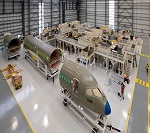
- Aircraft Manufacturing.
Front page.
Logo:
AMName:
Mexican airplanes.Phrase:
Planes that give you an exclusive service.Problem:
The aircraft manufacturing industry faces its biggest logistics and production crisis in decades in 2024 and 2025, characterized by a severe shortage of components, delivery delays, and a widespread inability to meet record airline demand. This situation limits the growth of the aerospace sector and generates high operating costs.
The main problems can be broken down into the following points:
- 1. Supply Chain Crisis.
- • Shortage of Materials and Parts: The aerospace supply chain has not recovered from the pandemic, leading to a shortage of essential components for assembling engines and fuselages.
- • Engine Problems: Engine suppliers, such as CFM (supplier of the A320), are unable to meet the required delivery rates.
- • Delivery Delays: Airlines are receiving aircraft years late, which has resulted in an unfulfilled order backlog exceeding 17,000 units worldwide.
- 2. Specific Challenges of Manufacturers (Duopoly).
- • Boeing and the Quality/Safety Crisis: Boeing faces severe quality control problems, accidents, and a strike in 2024 that paralyzed production. This resulted in losses of billions of dollars and a drop in its stock price. In 2025, new safety problems were found in the 737 Max, which had not yet been delivered.
- • Airbus and the "Bottleneck": Although it leads the market, Airbus is also experiencing delays due to fuselage problems in the A320 series and issues with software components. The company has had to adjust its delivery expectations because its mega-production facilities are overwhelmed.
- 3. Impact on the Market and Airlines.
- • Aircraft Shortage and Increased Costs: The shortage of new aircraft forces airlines to keep older, less efficient aircraft in service, increasing maintenance and fuel costs.
- • Slowing Growth: Despite record passenger demand, the lack of fleet capacity limits airlines' ability to expand.
- • Financial Impact: Supply problems and delays are estimated to cost airlines more than $11 billion by 2025.
- 4. New Risks and Trends.
- • Conflicts and Sustainability: Geopolitical instabilities and pressure to comply with sustainability regulations (Fly Net Zero) force companies to invest in more efficient technologies, increasing production costs.
- • Shortage of Skilled Personnel: Globally, the lack of skilled labor in the aviation industry hinders the recovery of production rates.
In short, the aviation industry is experiencing a paradox: unprecedented demand for air travel faced with a technical and logistical inability to deliver the necessary aircraft, with Boeing in a deep crisis of confidence and Airbus limited by its suppliers.
Solution:
Aircraft manufacturing and the aerospace market in 2025-2026 are at a critical stage of transformation, characterized by the need to balance record demand for new aircraft with severe supply chain constraints and urgent pressure for sustainability. Current solutions focus on automation, new fuels, and advanced materials to overcome these challenges.
- 1. Manufacturing Solutions (Production and Technology).
- • Automation and AI in Factories: Manufacturers are implementing artificial intelligence and advanced robotics to increase the speed and accuracy of production (smart factories), reducing assembly times.
- • Additive Manufacturing (3D Printing): Increasing use to create complex and lightweight parts, reducing material waste and speeding up the supply chain.
- • Advanced Materials: Increased incorporation of carbon fiber composites and thermoplastics in wings and fuselages to lighten aircraft and improve fuel efficiency.
- • Supply Chain Solutions: Faced with delays (with record order backlogs of up to 17,000 aircraft), manufacturers are diversifying suppliers and increasing production of engine parts and structures, although bottlenecks are expected to persist until the end of 2025.
- 2. Market Solutions for Sustainability.
- • Sustainable Aviation Fuel (SAF): It is the main short/medium-term solution for reducing CO2 emissions. The production of SAF from waste (cooking oil, biomass) is an industry priority.
- • Next Generation Aircraft (Hydrogen/Hybrids): Airbus leads projects such as ZEROe to develop hydrogen-powered commercial aircraft by 2035, in addition to exploring hybrid-electric technologies for regional aircraft.
- • Operational Efficiency: Modernizing fleets to retire older aircraft and improve fuel efficiency, complying with ICAO CORSIA regulations.
- 3. Market Trends and Challenges 2025-2026.
- • Healthy Demand vs. Production Delays: Despite high demand (889 Airbus orders in 2025), deliveries are slow due to shortages of components and personnel, forcing airlines to keep older aircraft in service longer.
- • The financial impact of bottlenecks: It is estimated that supply chain problems will cost the industry more than $11 billion in 2025 due to excessive fuel costs (old aircraft) and maintenance.
- • Evolved Roles: AI and automation are not only in the factory, but are also evolving in the cockpit to support pilots as digital "co-pilots," improving safety, although the human pilot remains indispensable due to regulations.
- • Aerospace Market in Mexico: Growth is observed in the Bajío (Querétaro) region with expansions of companies like Safran, consolidating the region as an aerospace manufacturing hub.
In summary, the market seeks to produce faster, lighter, and cleaner aircraft, while managing a supply crisis that has driven up the value of in-service aircraft and leasing rates.
Potential market size (TAM, SAM, SOM).
The aircraft manufacturing market is a capital-intensive sector with sustained demand due to increased air traffic and fleet modernization. Projections indicate robust growth, driven by commercial aviation and defense, reaching figures exceeding $600 billion by 2030.
- Potential Market Size (Estimates 2025-2030).
- • TAM (Total Addressable Market): The total global market for aviation manufacturing (commercial, defense, business jets, cargo) exceeds $664 billion USD in 2025 and is projected to grow to over $859 billion USD by 2030. It encompasses all new aircraft, spare parts, and maintenance required worldwide.
- • SAM (Serviceable Available Market): Dentro de este mercado, el segmento específico de aviones comerciales y militares de carga es uno de los motores principales, con un valor estimado de $416 mil millones USD en 2025.
- • SOM (Serviceable Obtainable Market): The specific market share that a leading manufacturer (such as Airbus or Boeing) can realistically capture in the short/medium term (3-5 years) considering its active production lines, which translates into a direct share of 40-50% of the SAM.
- Market Relevance.
- 1. Sustained Growth: A compound annual growth rate (CAGR) of between 5.29% and 7.69% is expected through 2030-2033, driven by the recovery of commercial aviation and the high demand for new, fuel-efficient aircraft.
- 2. Market Drivers: The need to replace older aircraft with low-consumption (fuel-efficient) models and the expansion of air infrastructure, especially in the Asia-Pacific region.
- 3. Technology and Sustainability: The development of eVTOL (vertical takeoff and landing) aircraft is a strong emerging trend, projected to reach $41.8 billion USD by 2030.
- 4. Impact in Mexico: The aerospace industry in Mexico is booming, with a projected value of $3 billion by 2030, representing a 14.7% increase since 2025, specializing in the manufacture of components.
- 5. Challenges: The shortage of components and materials, such as titanium and electronics, has extended delivery times, driving the MRO (Maintenance, Repair and Operations) market.
Market Opportunity:
Aircraft manufacturing is experiencing solid growth, driven by commercial and military demand, with a global market expected to exceed $21 billion by 2034. Key opportunities lie in sustainable technologies (hydrogen/electric), the modernization of narrow-body fleets, and the manufacturing of components in strategic regions such as Mexico, which is projected to grow by 14.7% by 2030.
- Key Opportunities in the Aircraft Manufacturing Market:
- • Sustainable Aviation and New Technologies: There is high demand for more efficient next-generation engines and hydrogen propulsion projects, which show the highest growth rate (CAGR of 8.37%).
- • Narrow-body: This segment leads production with over 17,000 units on backorder, driven by the need for airlines to renew their fleets with more efficient options.
- • Component Manufacturing in Mexico: Mexico is positioned as the tenth largest producer worldwide, specializing in the manufacture of components for final assembly in the US and Canada, with a projected sector growth of 14.7% by 2030.
- • Defense and Military Aircraft: This sector maintains a strong annual growth rate of 6.40% until 2030, driven by current defense budgets.
- • Private and Corporate Jet Market: Increased global wealth drives demand for customized and business jets.
- Driving and Geographic Factors:
- • Asia-Pacific: Region with the highest growth (6.98% CAGR) due to infrastructure improvements and a growing middle class.
- • North America: Dominated by Boeing and Lockheed Martin, it accounts for 59.49% of revenues in 2024, with high investment in R&D.
- • Staff Demand: The industry will need 2.37 million new professionals (pilots, crew, technicians) by 2044.
In summary, the opportunities are concentrated in technological innovation (sustainability) and supply chain efficiency in low-cost, highly specialized regions, such as Mexico.
Business Model:
The aircraft manufacturing business model is based on high R&D costs, long production cycles (3-6 months per aircraft), and a global supply chain, focusing on safety, efficiency, and customization. Revenue comes from the sale of commercial, military, or private aircraft, with a market valued at over one billion in 2026 and growing.
- Key Components of the Business Model:
- • Design and Engineering: Intensive use of 3D software, virtual testing, and global collaboration to create safe and efficient aircraft.
- • Supply Chain and Production: Complex assembly of millions of parts from global partners (engines, avionics, structures), requiring precision logistics.
- • Certification and Regulation: Strict certification process with authorities such as the FAA (USA) or EASA (Europe) before entering service.
- • Sales and After-Sales Service: Direct sales to airlines, leasing companies or private clients, including technical support and long-term maintenance.
- • Market Segmentation: Specialized production in narrow fuselage (short range), wide fuselage (long range), business or military aviation.
- Success Factors:
- • Investment in R&D: Constant need to innovate to improve fuel efficiency and reduce emissions.
- • Partner Strategy: Selection of the best global suppliers to optimize quality and reduce costs.
- • Risk Management: High dependence on economic stability and air travel demand.
Traction:
Aircraft manufacturing and marketing have evolved towards a highly technological model, integrating electric and hybrid propulsion for sustainability and digital marketing for customer management and production optimization (Industry 4.0).
The key aspects of this convergence are detailed here:
- 1. Aircraft Manufacturing and New Traction Technologies.
- • Manufacturing Process: It begins with complex 3D designs, using lightweight and strong materials such as aluminum and carbon fiber. Assembly involves advanced robotics and laser systems for the fuselage and wings.
- • Traction and Sustainability: The future of aviation is heading towards electric and hybrid engines to reduce emissions.
- ......o Hybrid Electric Propulsion Aircraft: Prototypes (e.g., Ecopods) are being developed with electric motors distributed in the wings.
- ......o Sustainable Fuel (SAF): Use of renewable fuels to reduce CO2.
- ......o Vertical Take-Off: Prototypes like the "Razer" seek to combine the vertical take-off capability (helicopter-type) with the speed of a commercial airplane.
- • 3D Printing: This technology is used to create complex metal components, such as titanium landing gear, reducing weight and manufacturing time.
- 2. Digital Marketing and Industry 4.0
Digital marketing in the aeronautical industry is no longer limited to advertising, but is now integrated with technical and commercial operations:
- • Digital Twins: Companies like Airbus use digital twins to simulate production and maintenance, enabling marketing based on efficiency and verifiable safety.
- • Unified Digital Ecosystem: Boeing seeks to integrate airline design, production, and services on digital platforms to offer customized solutions and improve the customer experience.
- • B2B Sales and Customer Management: Use of digital marketing strategies to connect with airlines and fleet operators, focusing on operational efficiency, low cost per seat, and reducing the carbon footprint.
- 3. Main Actors and Trends.
- • Leading Manufacturers: Airbus and Boeing dominate the large passenger aircraft market, while Bombardier, Gulfstream, Embraer, and Dassault excel in private jets.
- • Artificial Intelligence (AI): AI is applied both to improve flight performance and to optimize predictive maintenance, which is a strong point in technical marketing for aircraft sales.
The combination of manufacturing driven by 3D printing technology, more efficient electric propulsion, and data-driven digital marketing (Industry 4.0) defines the future of commercial and private aviation.
Marketing and Sales:
Aircraft manufacturing is a high-tech industry with long sales cycles and demanding technical requirements. The customer acquisition strategy should be based on trust, safety, operational efficiency, and long-term relationships, rather than mass advertising.
This outlines a comprehensive B2B marketing and sales strategy for aircraft manufacturers (OEMs) and their suppliers:
- 1. Marketing Strategy (Positioning and Authority).
The goal is to demonstrate technical expertise and safety to reduce the risk perceived by the client.
- • Technical Content Marketing: Create technical reports (white papers), case studies, and specialized articles that solve specific problems (e.g., "How to reduce fuel consumption by 5%" or "Improvement in composite materials").
- • LinkedIn for B2B Aerospace: It is the essential social network. Use it to share production milestones, technical certifications, and thought leadership from management.
- • Presence at Industry Events: Actively participate in key trade shows such as NBAA, EBACE, or MRO Americas. Face-to-face sales are crucial in this sector.
- • Product Visualization (Storytelling): Use high-quality audiovisual material (360° videos, virtual tours of booths/plants) to showcase the quality of the final product before delivery.
- • Technical SEO: Optimize the website with "long-tail" keywords focused on specific solutions, not just "airplanes," but "efficient jet engine components for commercial airlines."
- 2. Sales and Acquisition Strategy (High-Level Relationships).
Customers in the aviation industry don't just buy a product; they're looking for a strategic partner.
- • Identification of the Ideal Customer (Buyer Personas): Focus on fleet directors, procurement managers and technical directors of airlines, cargo operators, or governments.
- • Consultative Selling Cycles: Since sales cycles last months or years, the sales team must act as a consultant, understanding the customer's cash flow and operational needs.
- • Alliance and Referral Strategy: "Partnering" with existing suppliers or complementary companies to obtain direct presentations (partnerships).
- • Use of Structured RFPs (Request for Proposals): Implement transparent private bidding processes to build trust and compete on value.
- • Sales Follow-up and Closing: Use CRM to automate ongoing follow-up (multiple contacts are needed) and present proposals based on ROI data and certifications.
- 3. Tactics for Closing Customer Deals.
- • Demonstration of Compliance (Certifications): Ensure that all technical documentation (logbooks, airworthiness certifications) is impeccable and available.
- • Offer Added Value: Beyond discounts, offer support services, pilot training/maintenance, or flexible financing.
- • Memorable Experience: In the case of executive aircraft, offer personalized visits to the manufacturing plant or test flights that generate an emotional connection.
The key to success is to move from being a simple supplier to becoming a technology partner that solves security and financial efficiency problems.
Competence:
In modern aircraft manufacturing, the superior competitive advantage no longer lies solely in flight capability, but in operational efficiency, technological sustainability, and supply chain optimization.
- Unique and Superior Differential Advantage.
Leading manufacturers differentiate themselves through the following pillars:
- • Sustainability as an advantage: Development of aircraft with composite materials (carbon fiber, fiberglass) that are lighter and reduce fuel consumption and noise pollution.
- • Advanced Automated Manufacturing (AFP): The use of Automated Fiber Placement allows for greater precision, lower structural weight, and faster production cycles.
- • Digital Integration and Predictive Maintenance: Aircraft equipped with IoT (Internet of Things) sensors that allow for predicting failures, reducing airline downtime.
- • Simplicity and Efficiency in the Supply Chain: Ability to connect global factories in a cohesive system, facilitating the logistics of large components.
- Main Competition (The Duopoly and Challengers).
Competition is dominated by a duopoly of large manufacturers, with players specializing in niche markets:
- 1. Airbus (Europe): Current leader in production efficiency and sales, notable for its wide-body composite aircraft (A350) and sustainable technologies.
- 2. Boeing (USA): Main rival, with a strong focus on large-capacity commercial aircraft (B787 Dreamliner) and maintenance services (GoldCare).
- 3. Embraer (Brazil): Leader in the regional aircraft and executive jet market.
- 4. Bombardier (Canada): Specialized in business aviation and private jets.
- 5. COMAC (China): New state-owned challenger focused on single-aisle commercial aircraft (C919).
The fierce competition is focused on reducing operating costs for airlines and increasing reliability, where 3D technology and automation are redefining which manufacturer is superior.
Team:
- Founder and CEO: I have 28 years of experience in Information Technology (IT), Robotics and Automation, working on projects for the most important companies worldwide.
- Investor provides: specialized consulting services in processes, procedures, and administration.
- Investors provide: project development for ERP, MES, SCADAs, DCS, PLCs, Instrumentation and Sensors (Hardware and Software).
- Investors provide: software for auditing computer systems and business administration (Hardware and Software) with a Global Supervisory System.
- Investors provide: specialized human resources for our industrial sector.
- Investor provides: the supply of software for websites, cybersecurity, mobile applications, etc.
- I am an expert in: automated manufacturing, in many sectors and specialties in various industries, machines, systems and processes.
- We have a career plan for our staff, with constant training in their area of responsibility in: processes, procedures, and machines, with constant growth.
Finances and Projections:
- Units sold annually: 2 m
- Price per unit: USD $ 174.42 M
- Variable cost per unit (Production and Sales): USD $ 69.77 M
- Fixed Costs (Administration, Production and Sales): USD $ 58.14 M
- Start-up costs (equipment, marketing, legal, etc.): USD $ 872.09 M
- Required working capital (inventory, payments): USD $ 116.28 M
- Estimated annual revenue: USD $ 348.84 mM
- Estimated annual variable costs: USD $ 139.53 mM
- Estimated annual contribution margin: USD $ 209.24 mM
- Contribution margin per unit: USD $ 104.65 M
- Annual equilibrium amount: 0.55556
- Equilibrium ratio to expected quantities: 0.00027
- Total initial funds required: USD $ 988.37 M
- Units to cover initial funds: 9.44444
- Equilibrium amount with initial funds: 10
- The repayment period for startup funds: 0.00472
- Annual return on initial investment: 211.71
- Ratio of price to variable cost: 0.4
- Contribution margin ratio: .59983
- ANNUAL GROWTH OF 25%.
Proposal:
The goal is to gather USD $ 34.88 mM- We already have the following available on credit:
- Consultancy: USD $ 23.26 M
- ERP System: USD $ 34.88 M
- MES System: USD $ 23.26 M
- DCS System: USD $ 17.44 M
- SCADA System: USD $ 17.44 M
- PLC System: USD $ 17.44 M
- Intrumentation System: USD $ 17.44 M
- Robotic assembly lines:(5) USD $ 186.05 M
- Global Supervisory System: USD $ 232.56 M
- Pendings:
- Industrial engineering design: USD $ 17.44 M
- Electric power generation system: USD $ 17.44 M
- Purified water system: USD $ 17.44 M
- Steam production system: USD $ 17.44 M
- Electrical system: USD $ 17.44 M
- Ultra-clean air system: USD $ 17.44 M
- Plant layout design: USD $ 17.44 M
- Machine supply: USD $ 174.42 M
- Electrical system supply: USD $ 17.44 M
- Land purchase: USD $ 17.44 M
- Structural design of an industrial building: USD $ 17.44 M
- Industrial building construction: USD $ 17.44 M
- The capital received from investors will be used for the missing points.
- The invested capital will be paid back in 10 years, 10 times the amount invested. For example, if USD $1,000.00 is received in April 2026, then USD $10,000.00 will be paid back in April 2036.

- If you are not yet convinced about purchasing our product, service, or course, we can conduct a technical assessment at your facility to provide greater clarity and precision regarding the scope of the report we deliver. This assessment costs USD $60,000.00 and will be carried out over two weeks at your location. This fee will be refunded upon purchase of the product, service, or course; otherwise, it will not apply.
- Technical Assessments: Service Description.
- We offer these options to clarify the technologies.
- Courses for:
- Executives.
- Beginners.
To purchase, use the QR code and send proof of payment via WhatsApp to the contact numbers provided.
- * = m = Thousands USD
- ** = M = Millions USD
- *** = mM = Thousands of Millions USD