Our Investments in Startups.
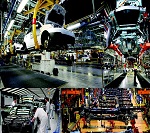
- Automobile Manufacturing.
Front page.
Logo:
AMName:
Mexican Automobiles.Phrase:
Your car, the best work tool.Problem:
The automotive industry faces a multifaceted crisis in 2026 characterized by geopolitical tensions that limit the supply of semiconductors, a decline in production and exports, and the challenge of transitioning to electric vehicles. High costs, component shortages, and uncertainty in the domestic market are driving a reconfiguration of the supply chain.
- Main Manufacturing and Market Problems (2025-2026):
- • Geopolitical Conflicts and Chips: The semiconductor shortage is no longer just due to the pandemic, but also to conflicts between China and Western powers (such as the restrictions in the Netherlands), causing technical shutdowns and production cuts.
- • Decline in Production and Exports: Countries like Mexico have registered significant declines in production (up to 6.1% in periods up to 2025) and exports, affecting brands such as General Motors, Volkswagen, and Nissan.
- • Transition to Electric Vehicles (EVs): The adoption of new technologies requires a huge investment, reconfiguring traditional plants and generating high competition.
- • Logistics and Raw Materials: Supply chain problems persist, with shortages of raw materials and logistical issues that extend unit delivery times.
- • Domestic Market and Prices: High prices for new vehicles, resulting from inflation and technological complexity, cause consumers to postpone purchases.
- • "Chocolate Cars" and Regulation: The entry of unregistered used vehicles (more than 3 million in Mexico) affects the sale of new vehicles and the environmental impact.
- Challenges for the Near Future:
- • Tariffs and USMCA: Trade tensions, especially tariffs on Chinese components or vehicles, create uncertainty in regional integration (USMCA).
- • Skilled Talent: Difficulty in finding specialized personnel in new technologies and automation.
The industry seeks stability through diversification of suppliers and adaptation to consumer demands for more technological and sustainable options.
Solution:
The automotive industry in 2026 is undergoing an accelerated transformation driven by the need for sustainability, digitalization, and supply chain restructuring. Current solutions focus on smart electrification, Industry 4.0-based manufacturing, and new market strategies to address cost volatility.
The main solutions and trends are detailed here:
- 1. Manufacturing Solutions (Production and Engineering).
- • Artificial Intelligence (AI) and Data: AI is used to improve efficiency, reduce costs, and predict demand. AI enables a shift from end-of-line quality inspection to real-time defect prevention by connecting inspection results with process conditions.
- • Additive Manufacturing (3D Printing): Increasing adoption for the production of customized parts, rapid prototypes, and replacement components, reducing downtime.
- • Collaborative Robotics (Cobots) and IoT: Integration of the Internet of Things (IoT) and robots to optimize assembly lines, allowing greater flexibility in the face of changes in the product mix and ensuring stability.
- • Plant Sustainability: Implementation of technologies for resource saving, such as water recycling and reuse systems, and emissions control in painting processes.
- 2. Market and Product Solutions.
- • Software-Defined Vehicles (SDV): The focus shifts from hardware to software. Cars become updatable (over-the-air) platforms, enabling new sources of income from subscriptions and services.
- • Hybrid Strategy in the Face of the EV "Cooling Down": Although electric vehicles (EV) They are the future, but demand is slowing. The current solution is an increase in the supply of hybrid vehicles to fill the market gap while the charging infrastructure stabilizes.
- • Supply Chain Restructuring: Faced with semiconductor shortages and new tariffs, manufacturers are relocating suppliers ("nearshoring") and diversifying to avoid disruptions.
- • Direct Sales and Digitalization: Dealerships are integrating their systems with those of manufacturers (OEMs) in real time to share vehicle data, manage warranties and improve the customer experience.
- 3. Market Context (2026).
- • Impact of AI: Artificial intelligence is "omnipresent", improving operational efficiency and personalizing customer interaction.
- • Cost Conflicts: The average price of new vehicles exceeds $50,000 USD in markets like the US, causing an "affordability crisis" that drives the used vehicle market and 0% financing programs.
- • Dominance of New Players: Companies focused on electric vehicles (such as BYD and Tesla) challenge traditional manufacturers, driving competition in technology and prices.
In summary, the industry is moving towards a more agile, technological, and proactive model, where AI and data management define quality and competitiveness.
This machine integrates into a single-location, online manufacturing process encompassing design, production, and packaging.
Potential market size (TAM, SAM, SOM):
The automotive manufacturing market is one of the world's largest and most dynamic industrial sectors, characterized by a profound transformation towards electrification and connectivity.
The potential market size is broken down here using the TAM, SAM, and SOM model based on recent projections for 2025-2026:
- 1. Potential Market Size (TAM, SAM, SOM) - Estimates 2025/2026.
- • TAM (Total Addressable Market):
- ......o Volume: Includes all light and heavy vehicles produced globally, with a prospect of exceeding 100 million units by 2030.
- ......o Monetary Value: The global automotive market is projected to reach approximately USD 4,544 billion (4.5 trillion) in 2025.
- ......o Definition: The total global opportunity if 100% of vehicle production were captured.
- • SAM (Serviceable Addressable Market):
- ......o Value: The SAM market focuses on specific niches, such as electric vehicles (EVs), which are experiencing high growth, or the specific auto parts and assembly market, estimated at USD 52.08 billion for assembly alone in 2025.
- ......o Definition: The portion of the total market area (TAM) that a manufacturer can serve based on its specialization (e.g., EVs, SUVs, trucks), geography, or technology.
- • SOM (Serviceable Obtainable Market):
- ......o Definition: The realistic market share that a specific company can achieve in the short or medium term (3-5 years), given its production capacity, costs, logistics, and competition. In 2024-2025, the light vehicle assembly market reported record highs, indicating opportunities for high competition in the SOM.
- 2. Relevance of the Automotive Industry.
- Automobile manufacturing is not only an economic engine due to its volume, but also because of its multiplier effect on the global economy.
- • High Economic Impact: The automotive industry represents a significant portion of GDP in producing countries. For example, in Mexico, it contributes approximately 3% of national GDP and 23% of exports.
- • Multiplier Effect: It is estimated that each euro invested in the automotive industry generates 2.6 times the added value in the overall economy.
- • Job Creation: It is a pillar that generates a high volume of direct and indirect jobs, ranging from manufacturing to the auto parts supply chain.
- • Engine of Innovation and Sustainability: The industry is transforming its value chain to reduce emissions, investing massively in electric vehicles (EVs), autonomous driving, and software.
- • Nearshoring and Geopolitical Change: The market is experiencing a reconfiguration of the supply chain, with greater investment in regions closer to end-consumption markets, such as Mexico for the North American market.
- 3. Key Trends 2025-2035.
- • Sustained Growth: The market is projected to grow at a compound annual growth rate (CAGR) of over 5.6% - 6.39% through 2035, driven by new technologies.
- • Post-Pandemic Recovery: Global vehicle sales for 2025 are expected to be above 90 million units, exceeding pre-pandemic levels of 2019.
- • Material Dominance: Steel remains dominant (52.6% of the market), but aluminum is experiencing the fastest growth due to the need to lighten vehicles to improve EV efficiency.
Market Opportunity:
Automotive manufacturing presents key opportunities focused on electromobility (EV), the development of autonomous vehicles, and the integration of AI, with a focus on sustainability. Mexico stands out as a strategic investment hub, driven by the USMCA and the relocation of supply chains (nearshoring).
- Key Market Opportunities (2026):
- • Electrification and Components: Massive growth in the production of electric vehicles (EVs) and their components, especially batteries, electric motors, and energy management systems.
- • Nearshoring in Mexico: Mexico is consolidating its position as a key manufacturing hub for North America, attracting foreign direct investment for automakers and auto parts suppliers.
- • Contract Manufacturing: Boom in contract vehicle manufacturing, especially for new EV brands seeking production agility.
- • Technology and Connectivity: High demand for components for autonomous driving, sensors, screens and advanced software systems, turning cars into "mobile computers".
- • Sustainability and Supply: Opportunities in the manufacture of lightweight materials and the recycling of components.
- • Specialized After-Sales Services: Maintenance and charging workshops dedicated exclusively to electric vehicles.
The industry faces the challenge of updating its workforce for these new technologies, offering opportunities in training and development of hybrid talent.
Business Model:
The business model in automotive manufacturing is based on a complex supply chain, high capital investment (Capex), and economies of scale to achieve profitability. It includes design, stamping, welding, and robotic assembly, moving towards electromobility, strategic alliances, and mobility services. Profitability depends on production volume, cost efficiency, and the integration of proprietary financing.
- Key Components of the Automotive Business Model.
- • Value Chain (OEMs and Suppliers): Manufacturers (OEMs) assemble the final product, while they depend on suppliers classified by levels (Tier 1, Tier 2) who provide specific components.
- • Production and Automation: The process consists of sheet metal stamping, welding, painting and final assembly, with high automation using robots to maximize efficiency.
- • Market Segmentation: It is mainly divided into volume vehicles (high volume, low margin) and Premium or luxury segment (low volume, high margin).
- • Sales and Distribution Strategy: Historically based on physical dealerships, evolving towards direct-to-consumer sales models and personalized experiences.
- • Financing and Income: Brand finance companies are a crucial source of income, offering auto loans with competitive rates.
- • Trends in New Models: Focus on electromobility (electric vehicles), sustainability and shared mobility.
- Success Factors and Barriers.
High initial investment, the need for constant innovation, and geographical proximity between manufacturers and suppliers are significant barriers to entry for new competitors.
Traction:
The automotive manufacturing industry is undergoing a radical transformation driven by electric powertrains and digitalization, where digital marketing plays a crucial role in connecting with consumers who research 92% of their options online before buying. The automotive sector has shifted from a traditional approach to data-driven strategies, personalization, and immersive experiences, such as augmented reality for visualizing vehicles.
- Key Points in Automotive Manufacturing and Marketing (2025-2026):
- • Electric Traction and Competition: The industry is experiencing a massive global expansion of electric cars, with BYD surpassing Tesla in global sales. Manufacturing is focused on energy efficiency and sustainability.
- • Digital Transformation in Production: Methodologies such as Six Sigma are used to improve quality and reduce costs in production plants.
- • Digital Marketing Strategies:
- ......o Lead Generation: Use of digital channels (SEO, ads) to attract potential customers.
- ......o Content and Experiences: Use of storytelling and content marketing to attract consumers.
- ......o InnovaciInnovation: Implementation of augmented reality to configure customized vehicles: Implementation of augmented reality to configure customized vehicles.
- ......o Social Media: Platforms like TikTok and Instagram are key to reaching new audiences, even using lo-fi trends for electric models.
- • Customer Optimization: Dealerships and brands use CRM to offer personalized services, from initial interest to after-sales service.
- Automotive marketing trends:
- • Video Marketing: 72% of car buyers watch online videos during their search process.
- • Content Marketing: Creating relevant and useful content that educates the consumer about new technologies (e.g., hybrids, electric vehicles).
- • Digital Ads: Use of targeted advertising on search engines and social networks to maximize return on investment.
Current success in the automotive industry combines high-quality manufacturing with a solid digital marketing strategy that covers the entire customer journey.
Marketing and Sales:
Manufacturing and selling automobiles requires a comprehensive strategy focused on customer experience, advanced digital marketing, and personalization. Key to success is using advanced CRM systems, immersive test drives (virtual/augmented reality), precise segmentation, and social media advertising (Facebook Automotive Ads) to convert leads into buyers.
- Key Strategies for Acquiring Customers (Marketing and Sales):
- • Personalized Experiences (2025): Use CRM systems and data platforms to offer tailored communications and offers, increasing loyalty and conversions.
- • Digital Marketing and Social Media: Create a strong presence on Instagram, Facebook, TikTok, and LinkedIn, going beyond photos to interact, create contests, and use paid ads (Automotive Inventory Ads).
- • Quality Content and SEO: Develop an SEO strategy for organic searches, include customer reviews, and create educational content that answers user questions.
- • Immersive technology: Implementing virtual and augmented reality for vehicle visualization, which improves customer experience and inventory management.
- • Test Drives and After-Sales Service: Organize memorable test drives and offer excellent after-sales service to build lasting relationships.
- • Programmatic Advertising and Retargeting: Using personalized ads for users who have already visited the website, segmented by behaviors and interests.
- Focus on Sales:
- • In-depth Technical Knowledge: Expert salespeople who highlight strengths and personalized benefits for the customer's lifestyle.
- • Customer Segmentation: Use tools to identify potential customers (e.g., those who haven't visited in 6 months or requested quotes).
These strategies combine traditional marketing with modern technology to maximize reach and conversion in the automotive industry.
Competence:
Automotive manufacturing in 2026 is defined by intense competition focused on electrification, artificial intelligence (AI), and supply chain agility. The competitive advantage no longer lies solely in the final product, but in the superiority of the production process and technological integration.
Here are the elements that make a modern automotive manufacturing unique and superior:
- 1. Differential Advantage (What makes us unique and superior).
- • Smart Factories and Industry 4.0: Integration of IoT, AI and advanced robotics for real-time monitoring, predictive maintenance and reduced downtime, achieving superior production efficiency.
- • Software-Defined Vehicles (SDV): Ability to develop vehicles where the software is central, allowing over-the-air (OTA) updates and rapid new functionalities.
- • Flexibility in SUV and BEV Production: Rapid adaptation of assembly lines to produce high-demand hybrid and electric (BEV) models (especially in the SUV segment) faster than the competition.
- • Online Inspection and Quality: Use of machine vision and non-destructive testing integrated throughout the process, rather than only at the end, avoiding line stops and ensuring high reliability.
- • Supply Chain Resilience: Strategic management of semiconductors and battery materials is crucial in a volatile market.
- 2. Competition (The automotive landscape 2026).
- • Chinese Brands: BYD, Geely, Wuling and Changan have consolidated their presence, with accelerated growth (e.g., +26.6% in Mexico at the beginning of 2026) and high market penetration.
- • Traditional Leaders: Toyota, Volkswagen, and General Motors maintain strong competition based on volume and reliability, adapting their traditional platforms to electric technologies.
- • New Value Players: MG and other imported brands that challenge price margins, although they face challenges due to high tariffs (up to 50%).
- • Competition by Segment: Compact and midsize SUVs remain the fastest growing segment and therefore the main battleground.
- 3. Key Sustainability Factors (2026))
- • Innovation in Materials: Use of sustainable materials (e.g., tomato skin for components).
- • Total Connectivity (V2X): Vehicles communicating with their environment (Internet of Things), improving safety and user experience.
In summary, the competitive advantage in 2026 will be achieved by those manufacturers that combine a high degree of intelligent automation with the flexibility to adapt electric vehicle production to changing demand.
Team:
- Founder and CEO: I have 28 years of experience in Information Technology (IT), Robotics and Automation, working on projects for the most important companies worldwide.
- Investor provides: specialized consulting services in processes, procedures, and administration.
- Investors provide: project development for ERP, MES, SCADAs, DCS, PLCs, Instrumentation and Sensors (Hardware and Software).
- Investors provide: the software for auditing computer systems and business administration (Hardware and Software) with a Global Supervisory System.
- Investors provide: specialized human resources for our industrial sector.
- Investor provides: the supply of software for websites, cybersecurity, mobile applications, etc.
- I am an expert in: Automated manufacturing, across many sectors and specialties in various industries, machines, systems, and processes.
- We have a career plan for our staff, with constant training in their area of responsibility in: processes, procedures, and machines, with constant growth.
Finances and Projections:
- Units sold annually: 1 M
- Price per unit: USD $ 232.56 m
- Variable cost per unit (Production and Sales): USD $ 93.02 m
- Fixed Costs (Administration, Production and Sales): USD $ 58.14 M
- Start-up costs (equipment, marketing, legal, etc.): USD $ 872.09 M
- Required working capital (inventory, payments): USD $ 116.28 M
- Estimated annual revenue: USD $ 232.56 mM
- Estimated annual variable costs: USD $ 93.02 mM
- Estimated annual contribution margin: USD $ 139.48 mM
- Contribution margin per unit: USD $ 139.53 m
- Annual equilibrium amount: 417
- Equilibrium ratio to expected quantities: 0.00041667
- Total initial funds required: USD $ 988.37 M
- Units to cover initial funds: 7 m
- Equilibrium amount with initial funds: 8 m
- The repayment period for startup funds: 0.00708
- Annual return on initial investment: 141.12
- Ratio of price to variable cost: 0.4
- Contribution margin ratio: .59975
- ANNUAL GROWTH OF 25%.
Proposal:
The goal is to gather USD $ 17.44 mM- We already have the following available on credit:
- Consultancy: USD $ 23.26 M
- ERP System: USD $ 34.88 M
- MES System: USD $ 23.26 M
- DCS System: USD $ 17.44 M
- SCADA System: USD $ 17.44 M
- PLC System: USD $ 17.44 M
- Intrumentation System: USD $ 17.44 M
- Robotic assembly lines:(5) USD $ 186.05 M
- Global Supervisory System: USD $ 232.56 M
- Pendings:
- Industrial engineering design: USD $ 17.44 M
- Electric power generation system: USD $ 17.44 M
- Purified water system: USD $ 17.44 M
- Steam production system: USD $ 17.44 M
- Electrical system: USD $ 17.44 M
- Ultra-clean air system: USD $ 17.44 M
- Plant layout design: USD $ 17.44 M
- Machine supply: USD $ 174.42 M
- Electrical system supply: USD $ 17.44 M
- Land purchase: USD $ 17.44 M
- Structural design of an industrial building: USD $ 17.44 M
- Industrial building construction: USD $ 17.44 M
- The capital received from investors will be used to cover the remaining points.
- The invested capital will be paid out within 10 years, 10 times the amount contributed. For example, if USD $1,000.00 is received in April 2026, then USD $10,000.00 will be paid out in April 2036.

- If you are not yet convinced about purchasing our product, service, or course, we can conduct a technical assessment at your facility to provide greater clarity and precision regarding the scope of the report we deliver. This assessment costs USD $60,000.00 and will be carried out over two weeks at your location. This fee will be refunded upon purchase of the product, service, or course; otherwise, it will not apply.
- Technical Assessments: Service Description.
- We offer these options to clarify the technologies.
- Courses for:
- Executives.
- Beginners.
To purchase, use the QR code and send proof of payment via WhatsApp to the contact numbers provided.
- * = m = Thousands USD
- ** = M = Millions USD
- *** = mM = Thousands of Millions USD