Our Investments in Startups
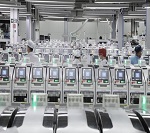
- Cell Phone Manufacturing.
Front page.
Logo:
CMNombre:
Mexican Cellulars.Frase:
Cell phones near you.Problem:
The mobile phone manufacturing and market will go through a complex phase in 2025 and 2026, marked by structural adjustment, a component crisis, and a slowdown in innovation that has diminished consumer interest. The main challenges are rising prices and market saturation.
- Main Problems in Manufacturing and Supply (2025-2026).
- • Memory Shortage for AI: The massive demand for components for Artificial Intelligence (AI) has led to a shortage of RAM and advanced chips. This has increased production costs and threatens to reduce global shipments by 12% year-on-year in 2026, the lowest volume since 2013.
- • Increased Production Costs: The chip shortage has driven manufacturing costs to three-year highs, forcing manufacturers like Xiaomi, Realme, and Apple to consider price increases of between 20% and 50%.
- • Environmental Impact and Resources: Production remains highly polluting, with 80% of the device's carbon footprint generated during manufacturing due to the extraction of rare earth elements (lithium, cobalt).
- Problems in the Consumer Market.
- • Lack of Innovation (Flat Market): New models (Samsung Galaxy, iPhone, Pixel) offer few significant generational changes compared to their predecessors, which discourages rapid equipment upgrades.
- • High Prices and Poor Batteries: Complaints are reported about premium devices (such as the Samsung Galaxy S25 Edge) that prioritize slim designs over battery life or thermal performance.
- • Low-End Quality: Entry-level models (e.g., Redmi A3, Galaxy A06) face criticism for poor performance, extreme slowness, and insufficient storage, resulting in a bad user experience.
- • Extended Life Cycles: Users are keeping their phones for longer, which has led to the market's most severe recession in the last decade.
- Regulatory and Geopolitical Challenges.
- • Regulation in Mexico (2026): June 30, 2026 has been established as the deadline for the registration of mobile lines, which will disable unregistered equipment.
- • Geopolitical Tensions: Geopolitical instability continues to affect global supply chains, causing uncertainty in production and distribution.
In summary, the market faces a bottleneck where AI drives up component costs, making phones more expensive, but they don't offer enough new features to justify their purchase, in a context of saturation and increasing environmental pressure.
Solution:
This machine integrates into a single-location, online manufacturing process encompassing design, production, and packaging.The mobile phone manufacturing industry and its market in 2025-2026 face a profound transformation, focused on the integration of Artificial Intelligence (AI), sustainability, and overcoming component shortages. Current solutions aim to improve production efficiency while adapting to a consumer who demands more durable and personalized devices.
Here are the main solutions and current trends:
- 1. Manufacturing and Supply Chain Solutions.
- • Artificial Intelligence and Automation (Smart Manufacturing): Over 75% of manufacturers use AI to improve machine performance and reduce unplanned downtime through predictive maintenance. The use of machine vision enables quality control that surpasses human accuracy.
- • Silicon-Carbon Batteries: In response to the demand for greater autonomy, manufacturers are adopting silicon-carbon batteries, with capacities approaching 6500 mAh, as the new high-end standard.
- • Bypass Charging: To prevent excessive wear and overheating, bypass charging technology is implemented, which allows the phone to operate directly from mains power while charging, without going through the battery.
- • Managing the Component Crisis (2026): To combat the shortage of memory chips, manufacturers are prioritizing the production of high-end phones and reducing the supply of basic models.
- 2. Trends and Solutions in the Market.
- • Integration of Generative AI (GenAI): AI is not only used in software, but is also incorporated into hardware for advanced camera functions, language processing, and personalization.
- • Rise of Foldables and Advanced Displays: A significant boost is anticipated in the foldable market, especially with Apple's expected entry into this segment, which will increase demand by 34.5% in 2026.
- • 256GB Standardization: Due to the high data consumption of AI and high-resolution photos, manufacturers are changing the base storage standard from 128GB to 256GB.
- • Sustainability and Repairability: The trend towards modular and repairable phones is increasing, driven by environmental regulations and consumer demand for longer device lifespan.
- 3. Competitive Landscape (2025-2026).
- • Apple and Samsung leadership: Apple led the market at the end of 2024 with a 23% share, followed by Samsung with 16%.
- • Resurgence of Huawei and Growth of Xiaomi: Huawei, with its advances in radio frequency (RF), and Xiaomi, with constant growth, are putting pressure on traditional manufacturers, intensifying competition in the premium segment.
- • Change in Pricing Strategy: Due to the cost of chips, average selling prices are rising,marking the end of the era of extremely cheap smartphones in certain markets.
In summary, manufacturing is moving towards smart automation to maintain profitability, while the market is betting on AI and durability to attract a more demanding consumer.
We develop online manufacturing, in a single location, design, production and packaging.
Potential market size (TAM, SAM, SOM):
The mobile phone manufacturing market is one of the largest and most dynamic technology sectors worldwide. For the period 2025-2026, it shows a high level of maturity, with a focus on technological upgrades (5G and Artificial Intelligence) rather than massive growth in the number of new users.
The following is an estimated market analysis using the TAM, SAM, and SOM model based on trends for 2025-2026:
- 1. Potential Market Size (TAM, SAM, SOM).
- • TAM (Total Addressable Market):
- ......o Definition: The total value of all cell phones that could be sold worldwide.
- ......o Size: The global smartphone market is estimated to exceed $600 billion USD in 2025, with shipments of around 1.25 to 1.3 billion units. This includes all segments, from low-end to premium and foldable devices.
- • SAM (Serviceable Available Market):
- ......o Definition: The market segment that a specific company (e.g., a mid-range manufacturer) can reach with its current business model (geography, price, technology).
- ......o Size: Example for a mid-to-high-end manufacturer: The 5G/AI segment in emerging markets (Asia Pacific, LATAM) represents a substantial SAM of over $300 billion USD.
- • SOM (Serviceable Obtainable Market):
- ......o Definition: The portion of the SAM that a company can realistically capture, considering the competition and production capacity (the target market share).
- ......o Size: For a new or niche manufacturer, this could be 1-5% of the SAM ($3 billion - $15 billion USD), while leaders like Samsung or Apple compete for the dominant SOM (approx. 20-25% each of the total SAM).
- 2. Relevance and Trends in Manufacturing (2025-2026)
Cell phone manufacturing no longer just involves assembling hardware, but integrating high-tech components.
- • AI (Artificial Intelligence) Integration: "AI-Phone" devices are the main trend of 2025-2026, which increases manufacturing costs and the average selling price (premiumization).
- • Asia-Pacific dominance: This region represents more than 47-50% of the manufacturing and consumer market.
- • Renewal and "5Gization": The expansion of 5G networks drives the need to replace older devices, maintaining demand despite market saturation.
- • Components and Sustainability Crisis: The industry faces supply chain challenges, with forecasts of declining shipments if the chip shortage deepens in 2026. Pressure is also increasing for sustainable manufacturing (recycled materials and longer lifespan).
- 3. Conclusion.
The mobile phone market is extremely relevant but highly saturated. Success lies in the ability to manufacture devices with advanced AI and 5G, where the most attractive SAM (Software as a Market) is found in the mid-to-high and premium ranges, seeking to capture a SOM (Software as a Market) that compensates for component shortages through higher margins.
Market Opportunity:
The market size is $609 billion annually.The mobile phone manufacturing market presents significant opportunities, driven by the constant demand for technological upgrades, the expansion of the 5G network, and the growth of the mid-range market. Globally, the smartphone market is expected to exceed $947 billion by 2030.
The main market opportunities are detailed below:
- 1. Rise of the Mid-Range and "Affordable Premium" segments.
- • Mid-range dominance: In markets like Mexico, seven out of ten sales correspond to the mid-range.
- • Opportunity: There is a significant space for manufacturers offering advanced technical features (good cameras, fast charging) at competitive prices, challenging traditional brands.
- • New players: Asian brands such as OPPO, Vivo, Honor, Realme, and Xiaomi are rapidly gaining market share by offering high technology at more affordable prices.
- 2. Refurbished Cell Phone Market.
- Sustainable growth: Consumers are looking for high-end smartphones at affordable prices, driving demand for refurbished devices that are restored to their original factory condition.
- • Opportunity: Reselling refurbished cell phones is a high-growth option, as it offers a functional and reliable product with a lower environmental impact.
- 3. Incorporation of 5G and New Technology.
- • Mandatory upgrade: The expansion of 5G technology is forcing users to change their devices, generating high demand for new compatible equipment.
- • Innovation: The development of health-focused devices (oxygen sensors, sleep) and integrated AI offers new lines of specialization.
- 4. Concentration on the Latin American Market.
- • Mexico as a HUB: Mexico is one of the main markets in Latin America. Although Samsung remains the leader, it has lost market share, opening up opportunities for other manufacturers.
- • Strategy: Manufacturers who manage to diversify their offerings and understand the diversity of Mexican users have a high chance of success.
- 5. Specialized Niches and Sustainability.
- • New materials: There is a trend towards manufacturing cell phones with more sustainable and environmentally friendly materials.
- • Online sales: Building a community and maintaining an active presence on social media (Instagram, TikTok) are fundamental for direct marketing and the growth of new brands.
- Summary of Current Competition (2025-2026):
- • Leaders: Apple and Samsung dominate in premium sales.
- • Growth: Xiaomi has shown outstanding growth, while brands like Honor and Realme are growing in the affordable price segment.
Conclusion: The market opportunity lies not only in producing high-end equipment, but also in the accessibility of the technology, the refurbished market, and the rapid adoption of 5G in mid-range devices.
Our direct customers are: The general public.
Business Model:
Our business model is direct sales.The business model in mobile phone manufacturing is based on high technology, extreme automation, and a global supply chain, where companies like Xiaomi produce a phone every 6 seconds in automated plants. It is characterized by the integration of components from various countries, exhaustive testing, and rapid inventory turnover to remain competitive.
- Key Components of the Business Model.
- • Automated and Efficient Production: Modern factories use robots 24 hours a day, achieving 100% automated processes to optimize costs and time, as is the case with Xiaomi's plant in Changping.
- • Global Supply Chain: Manufacturing involves a complex international network where components such as microprocessors, OLED screens, and lithium batteries are assembled and subjected to quality testing at each stage.
- • "White Label" Model (Private Label): An alternative for entering the sector is the use of White Label manufacturers, who provide pre-made, unbranded cell phones, allowing customization of the hardware and software (RAM, storage) to sell under a private label without the high initial design costs.
- • Range Diversification: Commercial success often depends on offering a mix of products, covering high, mid, and low ranges (e.g., Honor X6A, Samsung A06, Moto E14 models) to maximize inventory turnover and cater to different budgets.
- Operational and Marketing Aspects.
- • Logistics and Distribution: A robust international logistics network is required to move the devices from the assembly plants to the final points of sale.
- • Design and Development: The process begins with teams of engineers and designers defining aesthetics, hardware, and software for over a year before mass production.
- • Certifications and Legality: It is necessary to consider import costs and the legal registration/certification of the models in the destination countries.
- • Profitability: In addition to direct sales, profitability is sustained through high sales volume and rapid turnover, preventing equipment from becoming stagnant in inventory.
This model adapts to the new demands of the market, where production speed and customization are fundamental.
Our business model will be direct sales to microchip manufacturers and product assembly.
Traction:
Sale to the general public.The manufacturing, growth (sales), and digital marketing of mobile phones is a dynamic ecosystem driven by high competition, technological innovation, and the need for an omnichannel presence. In 2025, the smartphone market shows growth, led by brands like Samsung, with a strong focus on premium segments and the integration of artificial intelligence.
The key aspects based on current trends are detailed here:
- 1. Manufacturing and Production of Cell Phones.
- • Development from scratch: Developing a smartphone involves a complex global supply chain, with key components coming from suppliers like Google or Qualcomm, and close collaboration in production, often centralized in Asia to ensure smooth manufacturing of cameras, displays, and electronic components.
- • Trends 2026: There is a growing focus on sustainability and energy efficiency in applications and operating systems.
- 2. Traction: Sales Generation and Growth.
Traction refers to a brand's ability to acquire customers and generate revenue.
- • Premium and Mid-Range Segmentation: Success is achieved through diversification, combining the continued traction of high-end series (e.g., Galaxy S/Z) with constant growth in the mid-range (e.g., Galaxy A).
- • Speed to market: The rapid adoption of new technologies, such as AI, is a key factor to differentiate oneself and gain market share.
- 3. Digital Marketing for Cell Phones.
Mobile marketing is essential, considering that over 70% of viewing time on platforms like YouTube occurs from mobile devices.
- • Key Strategies:
- ......o Mobile Optimization: Websites must be optimized for mobile devices to ensure a good user experience.
- ......o Clean and Visual Content: It is recommended to create clean posts, without many elements, similar to Apple ads, highlighting the visual quality of the product.
- ......o Micromoments: Taking advantage of the moments when users are quickly searching for information to offer immediate solutions.
- ......o Omnichannel Strategy: Integrating digital marketing with other communication and sales channels to offer a consistent experience.
- • Platforms: Instagram, TikTok, LinkedIn, WhatsApp, YouTube, and Google are vital for building a community and generating sales.
- 4. Digital Transformation of the Sector.
- • AI and Augmented Reality: Digital transformation in industry is incorporating AI, augmented reality, and virtual reality to improve customer experience and manufacturing efficiency.
- • Entrepreneurial Marketing: You can create traction in small cell phone sales businesses through an active presence on social media, even without large investments, by focusing on building a community.
- Summary of Keys to Success:
To succeed in this market, high-quality visual adjustments must be made to advertising, focusing on the product's benefits and using artificial intelligence to personalize messages.
Sales, delivery, and installation at each plant located in the main cities of Mexico.
Marketing and Sales:
Direct contact with manufacturers.The manufacturing and marketing of cell phones is a highly competitive market, where success lies in differentiation, precise niche segmentation, and a marketing strategy focused on trust. For a new brand, the most effective strategy is usually consultative selling (listening to needs before selling) and focusing on specific niches (e.g., low-to-mid range with high value, rugged phones) rather than competing directly with giants like Apple or Samsung.
Here is a comprehensive strategy divided into key stages:
- 1. Manufacturing and Product Strategy (Differentiation).
- • Identify the "Beachhead Niche": Don't try to sell to everyone at first. Focus on a specific segment (e.g., seniors, low-budget gamers, construction workers) to gain initial traction.
- • Value-Added Product: Instead of just competing on price, it highlights specific technical or aesthetic features. Camera quality and battery life are key decision factors.
- • Guarantee and Trust: In markets like Mexico, offering a solid guarantee (approx. 90 days) is fundamental to establishing trust.
- • Distribution Logistics: Ensure that components (screens, batteries) come from reliable suppliers to maintain quality and meet delivery times.
- 2. Strategic Marketing (Acquisition).
- • Content Marketing and Social Media: Use Instagram and TikTok to showcase short videos (product demonstrations, side-by-side comparisons, customer testimonials).
- • Influencer Marketing: Collaborate with micro-influencers who have loyal audiences and specific niches (technology, lifestyle).
- • Targeted Advertising (Meta Ads / Google Ads): Targets ads to people interested in mid-range cell phones or searches for "best cheap cell phone 2026".
- • Brand Experience (Branding): Develop a uniform visual identity (logo, colors, packaging) to generate professionalism.
- 3. Sales Strategy (Conversion).
- • Consultative Selling (Acting like a Doctor): Listen to the customer before offering the product. Ask questions about their needs (camera? games? battery?) to recommend the right model.
- • Sell Emotions, Not Specifications: Customers don't buy 8GB of RAM, they buy the ability to have 20 apps open without the phone freezing. Focus on the benefit.
- • Omnichannel: Offers a seamless experience across the website, WhatsApp (for closing sales) and physical locations or Facebook Marketplace.
- • Payment Options: Offering financing plans or interest-free installments is key to increasing the conversion rate in the mid-range and high-end segments.
- 4. Customer loyalty and after-sales service.
- • Referral Marketing: Incentivize your first customers to recommend the brand in exchange for accessories or discounts on future models.
- • Local Technical Service: Offering fast support or agreements with local workshops increases trust and long-term loyalty.
- Strategy summary:
"Don't launch a cell phone, launch a solution to a specific communication problem, packaged in a trusted brand and sold with personalized service."
Competition:
Machine designed for online production, achieving shorter production times and a simpler, more direct process.In the 2026 mobile phone manufacturing market, characterized by technological maturity and the massive integration of AI, the competitive advantage no longer lies solely in the hardware, but in the personalized user experience, operational sustainability, and the integration of advanced generative AI.
This section details what makes a manufacturer unique and superior, along with its current competition:
- 1. Differential Advantage: What makes us Unique and Superior.
- • Personalized Ecosystem AI: Unlike generic AI, our superiority lies in an AI assistant that proactively learns from user habits in real time to optimize not only the mobile phone, but also the smart home, car, and work, creating an immersive experience.
- • "Guaranteed Longevity" (Sustainability): We focus on a modular design that facilitates quick repairs (screens, batteries) and offer up to 7 years of software updates, ensuring that the phone is as useful in its fifth year as it was in its first.
- • "Conscious Fast Charging": We solve the battery crisis by offering ultra-fast charging (0-100% in more than 15 min) without degrading battery life in the first 3 years.
- • Next Generation Composite Materials: Lighter structures, water/dust resistant (IP68/IP69 certified) and manufactured with 90% recycled materials.
- 2. Competition in 2026.
The market is led by players with established ecosystems and advanced AI capabilities:
- • Samsung (Leader in AI and Ecosystem): Fierce competition with the Galaxy S26 and Z Fold/Flip series, standing out for its distribution network, mature ecosystem, and the integration of AI in the mid-range (Galaxy A56).
- • Apple (Ecosystem and Brand): The iPhone 17 Pro Max continues to be a benchmark in brand loyalty and operating system performance.
- • Xiaomi (Value for Money): A strong competitor with the Redmi Note 14/15 series, offering premium features (AMOLED screens, fast charging) at competitive prices.
- • Google (Native AI): Pixel 10 Pro focused on photographic capabilities and pure Google AI integration.
- • Huawei (Performance): Remains a strong competitor in photography and hardware innovation.
- 3. Differentiation from the competition.
- • Compared to Samsung/Apple: We offer greater freedom to customize the operating system and more affordable repairs.
- • Compared to Xiaomi: We focus on a cleaner software experience, without ads and with faster technical support.
Note: This analysis is based on market trend projections for 2026.
Machine designed for online production, achieving shorter production times and a simpler, more direct process.
Team:
- Founder and CEO: I have 28 years of experience in Information Technology (IT), Robotics and Automation, working on projects for the most important companies worldwide.
- Investor provides: specialized consulting services in processes, procedures, and administration.
- Investors provide: project development for ERP, MES, SCADAs, DCS, PLCs, Instrumentation and Sensors (Hardware and Software).
- Investors provide: the software for auditing computer systems and business administration (Hardware and Software) with a Global Supervisory System.
- Investors provide: specialized human resources for our industrial sector.
- Investor provides: the supply of software for websites, cybersecurity, mobile applications, etc.
- I am an expert in: automated manufacturing, in many sectors and specialties in various industries, machines, systems and processes.
- We have a career plan for our staff, with constant training in their area of responsibility in: processes, procedures, and machines, with constant growth.
Finances and Projections:
- Units sold annually: 360 M
- Price per unit: USD $ 1.74 m
- Variable cost per unit (Production and Sales): USD $ 697.67
- Fixed Costs (Administration, Production and Sales): USD $ 58.14 M
- Start-up costs (equipment, marketing, legal, etc.): USD $ 872.09 M
- Required working capital (inventory, payments): USD $ 116.28 M
- Estimated annual revenue: USD $ 627.91 mM
- Estimated annual variable costs: USD $ 251.16 mM
- Estimated annual contribution margin: USD $ 375.64 mM
- Contribution margin per unit: USD $ 1.05 m
- Annual equilibrium amount: 56 m
- Equilibrium ratio to expected quantities: 0.000154
- Total initial funds required: USD $ 988.37 M
- Units to cover initial funds: 1 M
- Equilibrium amount with initial funds: 1 M
- The repayment period for startup funds: 0.002623
- Annual return on initial investment: 381.12
- Ratio of price to variable cost: 0.4
- Contribution margin ratio: .5999
- ANNUAL GROWTH OF 25%.
Proposal:
The goal is to gather USD $ 11.63 mM- We already have the following available on credit:
- Consultancy: USD $ 23.26 M
- ERP System: USD $ 34.88 M
- MES System: USD $ 23.26 M
- DCS System: USD $ 17.44 M
- SCADA System: USD $ 17.44 M
- PLC System: USD $ 17.44 M
- Intrumentation System: USD $ 17.44 M
- Robotic assembly lines:(5) USD $ 186.05 M
- Global Supervisory System: USD $ 232.56 M
- Pendings:
- Industrial engineering design: USD $ 17.44 M
- Electric power generation system: USD $ 17.44 M
- Purified water system: USD $ 17.44 M
- Steam production system: USD $ 17.44 M
- Electrical system: USD $ 17.44 M
- Ultra-clean air system: USD $ 17.44 M
- Plant layout design: USD $ 17.44 M
- Machine supply: USD $ 174.42 M
- Electrical system supply: USD $ 17.44 M
- Land purchase: USD $ 17.44 M
- Structural design of an industrial building: USD $ 17.44 M
- Industrial building construction: USD $ 17.44 M
- The capital received from investors will be used to cover the remaining points.
- The invested capital will be paid out within 10 years, 10 times the amount contributed. For example, if USD $1,000.00 is received in April 2026, then USD $10,000.00 will be paid out in April 2036.

- If you are not yet convinced about purchasing our product, service, or course, we can conduct a technical assessment at your facility to provide greater clarity and precision regarding the scope of the report we deliver. This assessment costs USD $60,000.00 and will be carried out over two weeks at your location. This fee will be refunded upon purchase of the product, service, or course; otherwise, it will not apply.
- Technical Assessments: Service Description.
- We offer these options to clarify the technologies.
- Courses for:
- Executives.
- Beginners.
To purchase, use the QR code and send proof of payment via WhatsApp to the contact numbers provided.
- * = m = Thousands USD
- ** = M = Millions USD
- *** = mM = Thousands of Millions USD