Our Investments in Startups.
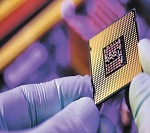
- Microprocessor Manufacturing.
Front page
Logo:
FSCMName:
Semiconductor Manufacturing of Mexico.Phrase:
Sovereignty in technology in online manufacturing of microprocessors (Design, Manufacturing and Packaging).Problem:
It takes a long time to manufacture a microprocessor, due to the distances between plants and the segmented stages of the process.In 2026, the microprocessor and semiconductor manufacturing industry is experiencing a complex and structural "silicon crisis, " characterized not by a lack of production capacity, but by explosive demand focused on Artificial Intelligence (AI) and a polarized market. Factories are operating at maximum capacity, but the priority is the high profitability of AI server components, leading to shortages and price increases in consumer sectors.
The following details the current manufacturing and market problems:
- Problems in Microprocessor Manufacturing (2026)
- • AI Hoarding (Packaging Bottleneck): The biggest limitation is not the manufacturing of the chip itself, but the advanced packaging (CoWoS) by TSMC required for GPUs and HBM (High Bandwidth Memory) used in AI. AI consumes so much high-performance memory that it reduces its availability for mainstream PCs.
- • Prioritization of Advanced Nodes (≤3nm): Manufacturers such as TSMC, Samsung, and Micron prioritize production on advanced 3nm and 2nm nodes (GAA transistors) for high-profile customers such as Apple and NVIDIA, exacerbating shortages on mature nodes and in less profitable sectors.
- • Sustainability Challenges: New manufacturing plants ("fabs") consume extreme amounts of water (up to 10 million gallons per day) and energy, creating environmental stresses.
- • Talent and Complexity Crisis: There is a critical shortage of skilled engineers and specialists, a gap that is exacerbated as manufacturing technology becomes exponentially more complex.
- Problems in the Microprocessor Market (2026)
- • Price Increases in PC and Gaming: The prioritization of servers has generated a projected increase of 35% to 50% in the average price of RAM (DRAM, DDR5, NAND) and processors, making 2026 a difficult year for the home PC market.
- • Shortages in the Automotive Sector: Despite relocation efforts ("reshoring"), mature nodes (≥40 nm), essential for the automotive and sensor industries, suffer from structural shortages.
- • Geopolitics and Fragmentation: Export restrictions between the US and China, and tensions in Taiwan, continue to redefine supply chains, forcing companies to diversify production and assume higher operating costs.
- • Demand Uncertainty: A possible scenario of overproduction is foreseen in certain types of memory if investment in AI does not maintain its current pace.
Summary of the situation: The AI craze has generated a "profitability crisis", where manufacturing chips for data centers is up to 500% more lucrative than for consumer products, causing chip manufacturers to prioritize supplying large technology companies.
Many losses due to microprocessor failures.
There's a lot of waste with round wafers, so we're going to use square wafers.
Very high cost due to very large Clear rooms.
Solution:
Single-plant manufacturing from wafers, design, testing, manufacturing, cutting, packaging, testing.Microprocessor manufacturing in 2026 is marked by a historic transition toward new architectures and materials, driven by the need to integrate artificial intelligence (AI) and overcome the physical limitations of silicon. The market is experiencing a silent "silicon crisis," with factories operating at maximum capacity, prioritizing AI chips over general-purpose ones, which has led to a significant price increase in memory (DRAM, DDR5) and processors.
Here are the main current manufacturing and market solutions:
- 1. Manufacturing Solutions (Technology and Materials)
- • Adoption of "Glass Substrates": Intel and TSMC are implementing glass substrates instead of fiberglass. This allows for larger, more rigid processors with better thermal conductivity, reducing overheating and enabling higher transistor density.
- • Chiplet Architecture: The industry has moved from manufacturing a single monolithic chip to using a chiplet architecture, which combines smaller, functional microchips. This improves performance and efficiency and reduces production costs by allowing the mixing of technologies from different nodes.
- • Extreme Ultraviolet Lithography (EUV): It is the standard technology for producing 3nm and 2nm nodes, allowing the creation of finer and more efficient transistor patterns.
- • Research in New Materials: To overcome the limitations of silicon at nanoscales, research is being conducted with graphene and silicon carbide to improve conductivity and reduce current leakage.
- 2. Market Solutions and Trends (2026).
- • The Era of "AI on the Device" (AI PCs): New microprocessors (e.g., Intel Core Ultra 300, Ryzen AI) integrate dedicated neural processing units (NPUs) to manage local intelligent assistants, moving AI from the cloud to the personal device.
- • Prioritizing AI vs. Consumer: The market is misaligned: producing high-performance chips for AI is up to 500% more profitable, which has led TSMC, Samsung, and SK Hynix to prioritize these orders, limiting the supply for PCs and phones.
- • New PC Platforms: In 2026, purchasing DDR5-compatible processors is considered a high-cost investment due to the AI bubble, while using platforms that still support DDR4 remains an economical option.
- • Geographic Diversification: In the face of geopolitical tensions, there is a global push to decentralize semiconductor production, with China advancing in the production of silicon-free chips and the United States increasing its local capacity.
- 3. Main Actors and Projections.
- • Manufacturing Leaders: TSMC remains the world's largest manufacturer, achieving record revenues in 2025. Intel and AMD compete fiercely in the high-performance desktop and laptop segment.
- • Market Growth: Global semiconductor sales are projected to reach one trillion dollars in 2026, with projected year-on-year growth exceeding 26%.
- • Consumer Prices: The average price of memory and components is projected to be between 35% and 50% higher in 2026 than in 2024 due to high demand and capacity shortages.
In summary, current solutions seek to densify power (new materials/chiplets) and diversify manufacturing in response to a voracious demand for AI, resulting in more expensive but significantly smarter hardware.
This machine integrates into a single-location, online manufacturing process encompassing design, production, and packaging.
Potential market size (TAM, SAM, SOM):
The microprocessor manufacturing market is one of the pillars of the modern digital economy, with exponential growth driven by Artificial Intelligence (AI), high-performance computing, and automation.
This section details the market size analysis based on the TAM, SAM, and SOM models for the microprocessor industry in the mid-2020s:
- 1. Potential Market Size (TAM, SAM, SOM)
- • TAM (Total Addressable Market):
- o It represents the total revenue opportunity for all semiconductors worldwide.
- o Value: The semiconductor market is projected to exceed US$1 trillion by 2030. In 2025, the market was valued at approximately US$598 billion.
- • SAM (Serviceable Addressable Market): o The specific segment of microprocessors and CPUs within the semiconductor market. o Value: It was valued at approximately $117.9 billion - $122.4 billion in 2024. It is projected to reach more than $181 billion - $196 billion by 2030-2032.
- • SOM (Serviceable Obtainable Market):
- o The portion of the SAM that leading manufacturers (Intel, AMD, Nvidia, TSMC) can capture in the short/medium term, concentrated in the design and manufacture of high-end chips (AI, data centers).
- o Dominance: A few manufacturers control the vast majority of the SOM. Asia Pacific accounts for almost 50% of the global market share, with TSMC (Taiwan) being the undisputed leader in manufacturing.
- 2. Relevance of Microprocessor Manufacturing. Microprocessor manufacturing is not only a profitable business, but also a matter of national security and technological sovereignty.
- • AI and Data Infrastructure: The demand for high-performance microprocessors for AI is the main driver of growth.
- • Geopolitics and Supply Chain: There is a global race to relocate manufacturing (reshoring) out of Asia Pacific (led by the CHIPS Act in the US and Europe), seeking autonomy after supply chain disruptions.
- • Multi-sectoral Economic Impact: It is fundamental for the automotive industry (electric and autonomous vehicles), consumer electronics, telecommunications (5G) and data centers.
- • Industry Concentration: Just five companies control 88.6% of the global semiconductor manufacturing market, highlighting the immense importance of a few key players.
- 3. Market Trends 2025-2030
- • Growth: A compound annual growth rate (CAGR) of over 8% is expected in the processor market.
- • Investment: Investment in factory expansion is reaching record levels, as is the case with GlobalFoundries, with investments in the billions of dollars.
- • Materials and Advanced: Wafer manufacturing and advanced packaging are the most critical technical areas today.
Market Opportunity:
The market size is $100 billion annually.Microprocessor manufacturing is a strategic, high-growth industry, driven by the increasing demand for artificial intelligence (AI), 5G connectivity, edge computing, and automotive electronics. The global microprocessor market, valued at approximately $15.9 billion in 2025, is expected to grow significantly, with projections to reach over $200 billion by 2034.
- Key Market Opportunities:
- • Artificial Intelligence (AI) and High Performance: The greatest demand comes from specialized chips for AI, data centers and cloud computing, where Nvidia and AMD have a strong presence.
- • Automotive Electronics and IoT: The increase in electric and autonomous vehicles, along with the Internet of Things (IoT), requires a high volume of advanced microprocessors.
- • Nearshoring and Geographic Diversification: Due to supply chain disruptions (2020-2023), countries such as the United States and members of the European Union are investing heavily to relocate manufacturing (CHIPS Act).
- • Mexico as a Semiconductor Hub: Mexico is positioned as a key player in the North American supply chain, with specific opportunities in chip assembly, testing, and final packaging.
- • Multi-core Processors: The multi-core processor market is expected to grow at a compound annual growth rate (CAGR) of 14.7%, driven by the need for greater processing power.
- Competitive and Geographic Landscape:
- • Asia Pacific dominates the market with almost 50% of the global share, led by Taiwan (TSMC), China and India.
- • Intel Corporation remains the leader in desktop and server processors.
- • Current investments are focused on improving production capacity in the North American and European regions to reduce dependence on Asia.
Our direct clients include: Artificial Intelligence, Cell Phones, Data Centers, Laptops, PCs, Microprocessors, Tablets, Automobiles, Motorcycles, Machinery, Appliances, Telecommunications, etc.
Business Model:
Our business model is direct sales.Microprocessor manufacturing is one of the world's most complex, expensive, and strategic industries. Its business model is based on high technology, intensive research and development (R&D), and an extremely specialized supply chain.
The business model and manufacturing process are detailed below:
- 1. Main Business Models
There are three main approaches in the semiconductor industry:
- • IDM (Integrated Device Manufacturer): Companies that design, manufacture, and sell their own chips. Examples: Intel, Samsung.
- • Fabless (Companies without a factory): Companies that design and market chips, but outsource physical production to foundries. Examples: NVIDIA, Apple, AMD, Qualcomm.
- • Foundry (Fundición): Empresas dedicadas exclusivamente a la fabricación de chips diseñados por terceros. Ejemplos: TSMC, GlobalFoundries.
- 2. Manufacturing Process
- Manufacturing is a "clean room" process that lasts for months and requires extremely high precision.
- • Raw Material: Quartz sand is used to obtain silicon, purified to 99.999999%.
- Ingots and Wafers: Silicon is melted to create single-crystal ingots (Czochralski process), which are cut into thin wafers.
- • Photolithography: Extreme ultraviolet (EUV) light is used to print millions of transistors layer by layer onto the wafer.
- • Doping and Connection: Impurities are introduced to change the electrical properties and the transistors are connected with metallic layers (copper/aluminum).
- • Testing and Encapsulation (OSAT): The wafers are cut (dicing), tested, and encapsulated to protect the chip and allow electrical connections.
- 3. Key Characteristics of the Business Model.
- • High Cost of Capital (CapEx): Building a state-of-the-art factory (Fabs) costs more than $20 billion.
- • Research and Development (R&D): Constant miniaturization (3 nm, 2 nm) requires massive investments.
- • Dependence on Single Suppliers: Companies like ASML are the only ones that produce the EUV lithography machines needed for advanced chips.
- • Geographic Concentration: TSMC (Taiwan) manufactures most advanced chips, which creates risks in the global supply chain.
- 4. Leading Companies:
- • Foundry: TSMC (world leader), Samsung, GlobalFoundries, Intel (in its new foundry strategy).
- • Design (Fabless): NVIDIA, AMD, Qualcomm, Apple.
- • Equipment: ASML, Applied Materials.
The market is moving towards efficiency, seeking to improve sustainability and exploring new materials (graphene) to overcome the physical limitations of silicon.
Our business model will be direct sales to microchip manufacturers and product assembly.
Tracción:
Sales to manufacturers of Artificial Intelligence, Cell Phones, Data Centers, Laptops, PCs, Microprocessors, Tablets, Automobiles, Motorcycles, Machinery, Appliances, Telecommunications, etc.Microprocessor manufacturing is one of the most complex and precise industrial processes in the world, transforming silicon into the "brain" of modern technology. The industry is dominated by a few key players who use advanced techniques such as EUV photolithography to create transistors at the nanoscale.
- Microprocessor Manufacturing Process
- 1. Extraction and Purification of Silicon: High purity silicon (99.999999%+) is obtained from quartz, melted and crystallized into cylindrical ingots using the Czochralski process.
- 2. Wafer Creation: The ingots are cut into extremely thin slices and polished to a mirror-like surface.
- 3. Photolithography: A photosensitive material is applied and ultraviolet (EUV) light is projected through masks to etch the internal circuits (transistor patterns) onto the wafer.
- 4. Doping and Deposition: Impurities are introduced to change the electrical properties (creating semiconductors) and layers of metal (copper or aluminum) are deposited to interconnect the transistors.
- 5. Cutting and Encapsulation: The wafer is tested and cut into individual chips (dicing). Finally, the chip is encapsulated to protect it and facilitate its connection.
- Key Players in the Industry
- Manufacturing is concentrated in a few companies, mainly in Asia and the United States:
- • TSMC (Taiwan): The world's largest foundry manufacturer, produces for Nvidia, Apple and others.
- • Intel: Designs and manufactures its own chips, as well as acting as a foundry.
- • Samsung Electronics: Leads production along with TSMC.
- • Other key players: AMD, Qualcomm, Huawei (HiSilicon).
- Trends and Digital Marketing in the Sector
- • AI and High Performance: The market is driven by the need for chips for Artificial Intelligence.
- • Miniaturization: The race is focused on sub-3 nm nodes, seeking higher performance and lower energy consumption.
- • Strategic Marketing: Marketing in this industry focuses on performance per watt, production capacity (foundry), and the energy sustainability of the plants.
- • Market Strategy: Companies like Intel are modifying their strategy to compete with TSMC, opening their factories to third parties.
The microprocessor market was valued at $123.82 billion in 2025 and is expected to continue growing through 2034.
Sales to Microprocessor manufacturers, delivery and installation at each plant located in the main cities of Mexico.
Marketing and Sales:
Direct contact with manufacturers.Microprocessor manufacturing is a high-tech, capital-intensive industry with long sales cycles (B2B). To succeed, the strategy must focus on trust, technical precision, and demonstrated technical capability (credibility). Potential customers (technology, automotive, IoT, and AI companies) seek reliable partners who guarantee performance, energy efficiency, and on-time delivery.
Here we detail the marketing and sales strategy:
- 1. Marketing Strategy for Semiconductors (B2B Industrial)
- • Technical Content Marketing (Authority): Creates white papers, case studies, technical webinars, and detailed technical articles on advanced node challenges, energy efficiency, and solutions to chip design problems.
- • Account-Based Marketing (ABM): Since customers are few and of high value, instead of mass advertising, it uses a personalized approach for each potential customer (e.g., hardware directors at Apple, Tesla, Samsung).
- • Ecosystem Design Alliances (EDA): Collaborate with EDA tool providers (such as Synopsys, Cadence) and IP providers to be recommended as ASIC manufacturing or design partners.
- • Participation in High-Level Trade Shows: Presence at CES, Embedded World, SEMICON, where high-level engineers and decision-makers are located.
- • Technical brand positioning: Highlight lithography technology (EUV), advanced packaging capabilities or specialization in specific sectors (automotive, IoT).
- 2. Strategy for Acquiring Clients (Prospecting).
- • Identification of the Ideal Customer Profile (ICP):
- ......o Original Equipment Manufacturers (OEMs): Automotive, medical, and consumer sectors.
- ......o Fabless companies: Companies that design, but do not manufacture chips (like Nvidia or AMD).
- ......o IoT and AI companies: They need low-power, high-speed chips.
- • Lead Generation Platforms: Use specialized platforms like AnySilicon to connect with companies that are looking for ASIC design services, IP cores, or packaging and testing.
- • Engineering Networking: Leverage networks of high-level engineers to generate referrals.
- 3. Sales and Closing Strategy (Long Cycle).
- • Consultative Selling (Problem Solving): Salespeople must have a solid technical background to understand the customer's design and offer foundry or turnkey manufacturing solutions.
- • Use of PDKs (Process Design Kits): Providing clients with PDKs so they can simulate the manufacturability of their designs in your plant, ensuring quality.
- • Comprehensive Service Offer (ASIC/Turnkey): Offering not only the wafer, but also design, testing, packaging, and quality compliance (ISO 9001, automotive).
- • Purchasing Committee Management: In B2B, decisions involve the CTO, purchasing directors, and engineering managers. The strategy must address the concerns of each role.
- • Automated Tracking (CRM): Use systems like Salesforce or Pipedrive to manage the long sales cycle, sending timely technical information at each stage.
- Summary of Keys to Success.
- 1. Credibility: Success stories and quality validation.
- 2. Trust: Sales cycles of months or years.
- 3. Technology: Demonstrate an advantage in advanced nodes (nanometers) or specialization (e.g., graphene, silicon carbide).
Direct contact with manufacturers.
Competence:
We are the only ones who manufacture online and reduce waste by using square wafers.Microprocessor manufacturing is one of the world's most complex and concentrated industries, currently dominated by TSMC, Samsung, and Intel. Their competitive advantage lies in their ability to achieve extreme miniaturization (nanometers), high production yield, and innovative 3D packaging.
- What Makes a Leading Manufacturer Unique and Superior
- • Mastery of Extreme UV Lithography (EUV): TSMC and Samsung are the only ones capable of mass-producing 3nm and 4nm nodes, using EUV machines for fine patterns.
- • Yield Efficiency: TSMC outperforms its competitors by achieving a higher percentage of functional chips per wafer, reducing costs and increasing reliability for customers such as Apple, AMD, and Nvidia.
- • Pure-play Foundry Model: Unlike Intel, TSMC does not design its own chips, which gives its customers confidence that it will not compete with them.
- • Innovation in Advanced Packaging: Techniques such as CoWoS (Chip-on-Wafer-on-Substrate) for AI allow for more efficient connection of multiple chips.
- • Collaborative Ecosystem: Ability to send engineers to resolve customer design flaws, guaranteeing the solution to the problem.
- Competition in Semiconductor Manufacturing
- 1. TSMC (Taiwan Semiconductor Manufacturing Company):
- ......o Advantage: Absolute leader with >60% market share in foundry. Better efficiency and ecosystem.
- ......o Superiority: Produces the most advanced chips for Apple, AMD, Nvidia.
- 2. Samsung Electronics:
- ......o Advantage: Pioneer in adopting GAAFET (Gate-All-Around) transistors in 3nm, seeking to surpass TSMC in energy efficiency.
- ......o Competition: It focuses on its own mobile SoCs (Exynos) and RAM/NAND memory.
- 3. Intel Corporation:
- ......o Advantage: IDM (Integrated Device Manufacturer) model that combines design and manufacturing.
- ......o Competition: It seeks to regain leadership with its 18A process (equivalent to 1.8nm) by 2025 after years of delays.
- Competitive Advantage vs. Competitors
- • TSMC vs. Samsung: TSMC has better supply chain management and higher yields, giving it a reliability advantage.
- • TSMC vs. Intel: TSMC has a "first-mover" advantage and an exclusive focus on the customer, while Intel is struggling to regain the technological advantage it lost in small nodes.
- • The common factor: They all depend on the lithography equipment of the European company ASML, the sole supplier of EUV machines.
The current race is focused on who will dominate the production of 2nm and alternative materials to silicon to improve energy efficiency.
Machine designed for online production, achieving shorter production times and a simpler, more direct process.
Team:
- Founder and CEO: I have 28 years of experience in Information Technology (IT), Robotics and Automation, working on projects for the world's leading companies.
- Investor provides: specialized consulting services in processes, procedures, and administration.
- Investors provide: project development for ERP, MES, SCADAs, DCS, PLCs, Instrumentation and Sensors (Hardware and Software).
- Investors provide: software for auditing computer systems and business administration (Hardware and Software) with a Global Supervisory System.
- Investors provide: specialized human resources for our industrial sector.
- Investor provides: the supply of software for websites, cybersecurity, mobile applications, etc.
- I am an expert in: automated manufacturing, in many sectors and specialties in various industries, machines, systems and processes.
- We have a career plan for our staff, with constant training in their area of responsibility in: processes, procedures, and machines, with constant growth.
Finances and Projections:
- Units sold annually: 10 M
- Price per unit: USD $ 581.40
- Variable cost per unit (Production and Sales): USD $ 232.56
- Fixed Costs (Administration, Production and Sales): USD $ 58.14 M
- Start-up costs (equipment, marketing, legal, etc.): USD $ 872.09 M
- Required working capital (inventory, payments): USD $ 116.28 M
- Estimated annual revenue: USD $ 5.81 mM
- Estimated annual variable costs: USD $ 2.33 mM
- Estimated annual contribution margin: USD $ 3.43 mM
- Contribution margin per unit: USD $ 348.84
- Annual equilibrium amount: 167 m
- Equilibrium ratio to expected quantities: 0.01666
- Total initial funds required: USD $ 988.37 M
- Units to cover initial funds: 3
- Equilibrium amount with initial funds: 3
- The repayment period for startup funds: 0.28813
- Annual return on initial investment: 3.47
- Ratio of price to variable cost: 0.4
- Contribution margin ratio: .59
- ANNUAL GROWTH OF 25%.
Proposal:
The goal is to gather USD $ 23.26 mM- We already have the following available on credit:
- Consultancy: USD $ 23.26 M
- ERP System: USD $ 34.88 M
- MES System: USD $ 23.26 M
- DCS System: USD $ 17.44 M
- SCADA System: USD $ 17.44 M
- PLC System: USD $ 17.44 M
- Intrumentation System: USD $ 17.44 M
- Robotic assembly lines:(5) USD $ 186.05 M
- Global Supervisory System: USD $ 232.56 M
- Pendings:
- Industrial engineering design: USD $ 17.44 M
- Electric power generation system: USD $ 17.44 M
- Purified water system: USD $ 17.44 M
- Steam production system: USD $ 17.44 M
- Electrical system: USD $ 17.44 M
- Ultra-clean air system: USD $ 17.44 M
- Plant layout design: USD $ 17.44 M
- Machine supply: USD $ 174.42 M
- Electrical system supply: USD $ 17.44 M
- Land purchase: USD $ 17.44 M
- Structural design of an industrial building: USD $ 17.44 M
- Industrial building construction: USD $ 17.44 M
- The capital received from investors will be used for the missing points.
- The invested capital will be paid back in 10 years, 10 times the amount invested. For example, if USD $1,000.00 is received in April 2026, then USD $10,000.00 will be paid back in April 2036.

- If you are not yet convinced about purchasing our product, service, or course, we can conduct a technical assessment at your facility to provide greater clarity and precision regarding the scope of the report we deliver. This assessment costs USD $60,000.00 and will be carried out over two weeks at your location. This fee will be refunded upon purchase of the product, service, or course; otherwise, it will not apply.
- Technical Assessments: Service Description.
- We offer these options to clarify the technologies.
- Courses for:
- Executives.
- Beginners.
To purchase, use the QR code and send proof of payment via WhatsApp to the contact numbers provided.
- * = m = Thousands USD
- ** = M = Millions USD
- *** = mM = Thousands of Millions USD