Nuestras Inversiones en StartUps
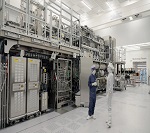
- EUV Lithography Machines.
Front page.
Logo:
MLMName:
Mexican Lithography MachinesPhrase:
Online lithography.Problem:
ASML's EUV (extreme ultraviolet) lithography machines face critical technical challenges, including invisible defects in the masks, extremely high energy costs, and variable yields. In the market, ASML's near-monopoly, coupled with US geopolitical restrictions limiting sales to China, complicates the supply chain, while China accelerates the development of its own technology to reduce dependence.
- Main Technical Problems
- • Mask Defects: EUV masks use multi-layered mirrors that are difficult to inspect. Small, hidden defects can propagate and ruin thousands of chips. • Light Source Complexity: Generating EUV light requires firing a laser at tin droplets 50,000 times per second, creating an extremely hot plasma that is complex to maintain. • Energy Consumption: A single EUV machine consumes as much energy as a small city, posing challenges for factory power grids. • Unstable Performance: Random electron scattering and photoresist physics create accuracy problems at nodes of 5nm or smaller.
- Market and Geopolitical Issues
- • ASML Monopoly: ASML is the sole supplier of EUV machines, limiting global production capacity.
- • Restrictions on China: US and Dutch bans prevent ASML from selling its most advanced machines to China.
- • Chinese Competition: China is making progress on its own EUV machines, with plans to produce functional chips between 2028 and 2030, which could reduce the impact of the sanctions.
- • High Costs: Each EUV machine costs over $200 million.
- Future Challenges
- • High Numerical Aperture (High-NA) EUV: The industry is already working on this technology for 2nm and 1nm nodes, which implies greater engineering challenges.
- • Sustainability: The immense energy consumption of semiconductor manufacturing is heading towards a scenario of more than 54,000 Gigawatts by 2030.
Remote construction, costly and risky transport, long installation times, technology subject to lock-in.
Solution:
Extreme Ultraviolet (EUV) lithography machines represent the pinnacle of current semiconductor manufacturing technology, essential for cutting-edge process nodes (7nm, 5nm, 3nm and smaller). ASML maintains a commercial monopoly on the supply of these machines, which are key to the production of high-end chips used in artificial intelligence (AI), advanced smartphones, and high-performance computing.
- Current Solutions in EUV Lithography (2024-2026)
- • High-Numerical Aperture EUV (High-NA EUV): This is the most advanced and recent technological solution. ASML has begun shipping the first EXE:5200 units (costing over $350-400 million) to companies like Intel and TSMC for testing and sub-2nm chip production. This technology uses larger mirrors to achieve higher resolution, allowing for finer patterns in a single exposure.
- • Productivity Improvement (High-Power EUV): More powerful light sources are being implemented to increase processing speed. The current machines are expected to reach a processing capacity of 330 wafers per hour by 2030, improving efficiency and reducing costs per chip.
- This machine integrates into a single-location, in-line manufacturing process encompassing design, production, and packaging.
- • Coexistence with DUV: In modern factories, EUV technology does not completely replace DUV (Deep Ultraviolet), but rather they coexist. EUV is reserved for the most critical and thinnest layers of the chip, while DUV continues to be used more economically for less critical layers.
- •• Stitching Techniques: Because High-NA EUV reduces the mask field (the exposed area), current solutions include die stitching to manufacture chips larger than the standard exposure area.
- • EUV Market Overview
- • ASML Monopoly and Key Customers: ASML is the sole supplier of these machines. Its main customers driving demand are TSMC, Samsung, and Intel.
- • AI-Driven Growth: The explosion of Artificial Intelligence (AI) and high-performance computing is increasing demand for chips that can only be manufactured using EUV machines, ensuring strong growth in sales of this equipment.
- • Massive Investment: TSMC has planned massive acquisitions of EUV tooling to enhance its manufacturing capabilities, reflecting the high investment in the sector (approximately $20-22 billion in related expansions).
- • The China Factor: Despite export restrictions imposed by the West, reports indicate that China has developed and is testing its own EUV lithography machines in a local "Manhattan Project," which could change the market dynamics.
In summary, lithography EUV is evolving towards High-NA to overcome the physical limitations of 2 nanometers, driven by the need for faster AI processors, as the market prepares for increased technological competition with local advancements from China.
Potential market size (TAM, SAM, SOM):
The extreme ultraviolet (EUV) lithography machine market is one of the most specialized, expensive, and crucial segments of the semiconductor industry. It is a technology monopoly market (dominated by ASML) that drives the manufacturing of the world's most advanced chips for AI, HPC, and 5G.
The following details the analysis of market size and its relevance (based on estimates for 2024-2026):
- 1. Potential Market Size (EUV Lithography).
- • TAM (Total Addressable Market): The total lithography equipment market (which includes DUV and EUV) was valued at nearly USD 30 billion in 2025 and is projected to grow to USD 67 billion by 2034.
- • SAM (Serviceable Addressable Market): The specific market for EUV lithography was estimated at approximately 10.2 to 11.5 billion USD in 2024-2025. This is the market that actually uses or needs EUV technology (sub-7nm, 5nm, 3nm).
- • SOM (Serviceable Obtainable Market): Considering that ASML has a 100% market share in EUV machines, its SOM is the entire EUV market. The EUV market is projected to grow at a CAGR of between 11.4% and 22.4%, reaching a value of over USD 26 billion by 2030-2032.
- 2. Relevance and Key Points.
- • Technical Monopoly: ASML is the only company in the world that manufactures commercial EUV lithography machines.
- • Extremely High Cost: A single EUV machine can exceed 150-200 million USD, while new High-NA EUV systems reach more than 350-400 million USD per unit.
- • Advanced Manufacturing: These machines use 13.5 nm light to print circuits at scales of 7nm, 5nm, 3nm and 2nm, necessary for high-performance processors and advanced memories.
- • Demand Drivers: Demand is driven by artificial intelligence (AI), high-performance computing (HPC), 5G/6G networks, and autonomous driving.
- • Geopolitics: Due to their fundamental role, these machines are subject to trade restrictions, becoming a national security issue for major technological powers.
- 3. Future Projections (EUV + High-NA).
The market is moving towards High-NA EUV (high numerical aperture), enabling even smaller nodes (sub-2nm). The adoption of these next-generation machines is expected to accelerate market value growth exponentially by 2030. Note: Values may vary slightly between different analyst reports, but the trend of high growth and dominance of ASML is consistent.
Our indirect clients include: Artificial Intelligence, Cell Phones, Data Centers, Laptops, PCs, Microprocessors, Tablets, Automobiles, Motorcycles, Machinery, Appliances, Telecommunications, etc.
Market Opportunity:
The extreme ultraviolet (EUV) lithography machine market represents one of the most critical, exclusive, and high-value business opportunities in the global technology industry. These machines are indispensable for manufacturing the most advanced microchips, powering AI, 5G networks, and autonomous vehicles.
Here are the key points of the market opportunity:
- 1. Monopoly and Market Leadership (ASML):
- • ASML (Netherlands) is the world's only supplier of EUV lithography equipment.
- • EUV technology uses 13.5 nm light, allowing for much smaller and more powerful circuits than previous technologies (DUV).
- • The barriers to entry are extremely high due to the engineering complexity, which strengthens ASML's position.
- 2. Product Value and Demand.
- • High cost: Each EUV machine can cost around $380 million, with the new High-NA units reaching higher costs.
- • Main clients: TSMC, Samsung, and Intel are the biggest buyers, using them to produce chips for Apple, Nvidia, Meta, and Amazon.
- • Growth projection: ASML has projected a significant increase in its revenue by 2030, driven by the insatiable demand for high-end chips.
- 3. Impact of AI and Sector Growth.
- • The overall lithography equipment market is projected to grow from $32.16 billion in 2026 to $67.43 billion in 2034.
- • AI and automation require chips of 3nm or less, which can only be manufactured using EUV lithography.
- 4. Geopolitical Challenges and Opportunities.
- • Restrictions on China: The United States and the Netherlands limit the sale of the most advanced EUV machines to China.
- • China seeks independence: China represents a huge market (almost 40% of ASML sales in certain periods), but is investing billions to develop its own EUV technology.
- • Future competition: Although ASML dominates, other companies like Canon are venturing into alternative technologies (such as nanoprinting) to offer more economical options.
- 5. Supplier Ecosystem (Investment Opportunity).
- • Zeiss (Alemania): Es un actor esencial que fabrica los espejos de precisión necesarios para la luz EUV.
- • TRUMPF (Germany): Supplier of the laser light source.
- • KLA Corporation (USA): Provider of quality control systems.
In summary, the EUV market opportunity is dominant for ASML, but it represents a strategic bottleneck for the entire technology industry, guaranteeing future sales thanks to the continuous development of AI and chip miniaturization.
Our indirect clients include: Artificial Intelligence, Cell Phones, Data Centers, Laptops, PCs, Microprocessors, Tablets, Automobiles, Motorcycles, Machinery, Machines, Appliances, Telecommunications, etc.
Business Model:
Our business model is direct sales.The business model for extreme ultraviolet (EUV) lithography machines is one of the most exclusive, strategic, and high-value in the global technology industry. It is currently monopolized by the Dutch company ASML, which designs and builds these machines, essential for the manufacture of advanced chips (5nm, 3nm, 2nm).
Here are the key points of their business model:
- • High-Tech Monopoly: ASML is the world's only manufacturer of EUV lithography machines. This gives them unparalleled market power, making them both the bottleneck and the driving force behind the cutting-edge semiconductor industry.
- • Extremely High Cost: Each EUV machine costs over 350 million euros, with more advanced models like the "High NA" exceeding 900 million euros.
- • Direct Sales Model to Tech Giants: ASML sells these machines in limited quantities to a few key clients, mainly TSMC, Intel and Samsung, who use them to manufacture chips for companies like Apple, Nvidia and AMD.
- • Revenue Generation through Service and Upgrades: Beyond sales, the business model includes long-term maintenance contracts, software and hardware upgrades, and on-site engineering technical support, guaranteeing recurring revenue.
- • Intellectual Property and Complex Supply Chain: Production depends on a highly specialized global supply chain, with Carl Zeiss AG (optics) and TRUMPF (lasers) being critical partners.
- • Geopolitics and Restrictions: The model is heavily influenced by geopolitics. The United States has imposed restrictions to prevent these machines from reaching China, positioning EUV machines as a national security asset.
In summary, the business model is a high-value B2B (Business to Business) model, based on technological exclusivity, high profit margins, and absolute dependence of the world's largest chip manufacturers on a single supplier.
Our business model will be direct sales to microchip manufacturers and product assembly.
Traction:
Sales to Microprocessor manufacturers, delivery and installation at each plant located in the main cities of Mexico.Extreme ultraviolet (EUV) lithography machines are currently the most advanced and essential technology for manufacturing modern microchips. ASML, based in the Netherlands, is the world's only supplier of these state-of-the-art machines, which cost approximately $350 to $400 million per unit.
- Key Points about EUV Lithography:
- • Technology and Function: They use light with a wavelength of 13.5 nanometers to print tiny patterns (thinner than a human hair) on silicon wafers.
- • Importance: They are necessary to produce the smallest and most powerful chips used in Artificial Intelligence (AI), 5G networks, advanced computing and autonomous vehicles.
- • Main Clients: Taiwan Semiconductor Manufacturing Co (TSMC), Samsung and Intel are the largest buyers of this equipment.
- • Geopolitical Situation: The most advanced EUV machines cannot be sold to China due to restrictions imposed by the United States and the Netherlands, which has prompted China to try to develop its own technology.
- • Competition and Future: Although ASML maintains a monopoly in EUV, companies like Canon are venturing into alternative technologies such as nanoimprint lithography. The next generation, "High NA EUV," is being delivered to customers like Intel to manufacture even more advanced chips.
- Traction in Digital Marketing and Technology:
The impact of these machines is so significant that companies like ASML, NVIDIA, and TSMC dominate the current technology narrative. Digital marketing strategies for these types of products focus on:
- • B2B Technical: Marketing aimed at semiconductor manufacturers highlighting the efficiency, precision, and increased performance of the chips (50% higher performance by 2030).
- • Thought Leadership: ASML positions itself not only as a provider, but as the indispensable enabler of AI and the digital future.
- • Technical and Geopolitical Content: Detailed analyses (Branch Education, technological media) that explain how machines work (mirrors, light sources) and their impact on the global economy.
The development and commercialization of this technology is one of the most important "investments" in the current global technological infrastructure.
Sales to Microprocessor manufacturers, delivery and installation at each plant located in the main cities of Mexico.
Marketing and Sales:
Direct contact with manufacturers.Selling extreme ultraviolet (EUV) lithography machines is one of the most complex and exclusive business processes in the world.
Since ASML is currently the only supplier capable of manufacturing these machines, the marketing and sales strategy is not based on mass advertising, but on high-level strategic relationships, technological co-creation, and direct sales with long-term contracts.
The marketing and sales strategy for this technology is detailed below:
- 1. Marketing Strategy (Positioning and Customer Acquisition).
Because the EUV market is an oligopoly with very defined customers (TSMC, Intel, Samsung), marketing must be hyper-specific.
- • Relationship Marketing and Thought Leadership: The strategy focuses on establishing the company as the only supplier capable of resolving bottlenecks in the manufacturing of sub-7nm chips.
- • Technical Content Marketing: Creation of technical documents (white papers), joint technology roadmaps, and high-precision case studies on how EUV reduces the number of manufacturing steps (reducing costs and defects).
- • Exclusive Industry Events: Participation in high-level forums (IEEE, SEMICON) for engineers and managers of foundries (fabs).
- • AI value-based strategy: Position EUV technology as the fundamental enabler for the next generation of AI, 5G, and autonomous vehicles, justifying its high cost (approx. $380-$400 million USD).
- 2. Sales Strategy (Conversion and Loyalty).
The sale is not transactional; it is a strategic alliance that lasts for years.
- • High-Touch Direct Sales: Highly trained sales engineer teams work directly with client executives. The sales process takes 12-24 months.
- • Co-creation and Co-investment in R&D: The winning strategy consists of inviting customers (such as TSMC or Intel) to co-invest in the development of the next generation of machines, such as the High-NA EUV (high numerical aperture).
- • Service and Upgrade Solutions (Upgradeability): Don't just sell the machine, sell the entire lifecycle. Offer customized hardware and software that increase productivity and accuracy over time.
- • On-site Support Teams: Place technical personnel from the manufacturer within the customer's facilities (cleanrooms) to guarantee 24/7 installation, operation, and maintenance.
- 3. Loyalty Strategy and "Design-Wins".
The goal is not to make a one-time sale, but to ensure that the customer's chip is designed around the technology of the lithography machine (design-in).
- • Long-Term Technology Roadmaps: Sharing 10-15 year visions with customers to align their needs for advanced nodes (2nm, 1.4nm) with the production capacity of future machines.
- • Partnership vs. Vendor: Transforming the supplier-customer relationship into a partnership where trust is key, ensuring that both benefit from technological advancement.
- 4. Challenges and Adaptation of the Strategy.
- • Geopolitics: EUV sales are limited by export restrictions (e.g., to China), requiring a strategy of regulatory compliance and a focus on allied markets.
- • High Costs: The business strategy must constantly justify the return on investment (ROI) through improvements in productivity and the ability to manufacture smaller and faster chips.
In summary, the strategy is a highly complex B2B (Business to Business) approach, where technical marketing generates authority and direct sales build strategic partnerships to ensure technology adoption.
Direct contact with manufacturers.
Competition:
Machine designed for online production, achieving shorter production times and a simpler, more direct process.
Extreme Ultraviolet (EUV) lithography machines represent the most advanced technology currently used in semiconductor manufacturing.
They are considered the "cornerstone of the AI era" and high-performance computing.
Here we detail what makes them unique, their competitive advantage, and the competitive landscape.
- 1. What makes EUV machines unique? (Differential Advantage)
The key advantage lies in the physics of light used and the precision of the engineering:
- • Extremely short wavelength (13.5 nm): Compared to the previous 193 nm lithography (DUV), EUV uses a much finer light, enabling the printing of incredibly small and dense circuits on silicon wafers.
- • Step Reduction (Single Patterning): Unlike DUV (Deep Ultraviolet) lithography, which requires multiple exposures and complex steps for advanced nodes (multipatterning techniques), EUV can perform the same task with fewer steps, increasing efficiency and reducing errors.
- • Advanced Node Capacity (7nm, 5nm, 3nm, 2nm): These are the only machines capable of manufacturing next-generation chips (AI processors, servers, premium smartphones) with billions of transistors in a tiny space.
- • Mirrors instead of lenses: Because 13.5 nm EUV light is absorbed by almost all materials (including air), the machine operates in a vacuum environment and uses high-precision mirrors (the flattest in the world) designed by Zeiss, instead of traditional glass lenses.
- 2. The Competition
Currently, there is no direct commercial competition in the EUV machine market.
- • ASML Holding N.V.: It is the only company in the world that designs, manufactures and sells commercial EUV lithography machines.
- • Competition in lithography in general: Nikon and Canon are strong competitors in DUV (conventional lithography) machines, but they have failed to develop competitive commercial EUV equipment, leaving ASML with a monopoly in this category.
- • The China challenge: Chinese companies, with state support, are trying to develop their own EUV technology to overcome export restrictions imposed on ASML, but they are believed to be years or decades behind in performance.
In summary: The key advantage of EUV is its unique ability to achieve Moore's Law at the atomic level in nodes of 5nm or smaller, with ASML being the only company capable of providing this technology.
Machine designed for online production, achieving shorter production times and a simpler, more direct process.
Team:
- Founder and CEO: I have 28 years of experience in Information Technology (IT), Robotics and Automation, working on projects for the world's leading companies.
- Investor provides: specialized consulting services in processes, procedures, and administration.
- Investors provide: project development for ERP, MES, SCADAs, DCS, PLCs, Instrumentation and Sensors (Hardware and Software).
- Investors provide: software for auditing computer systems and business administration (Hardware and Software) with a Global Supervisory System.
- Investors provide: specialized human resources for our industrial sector.
- Investor provides: the supply of software for websites, cybersecurity, mobile applications, etc.
- I am an expert in: automated manufacturing, in many sectors and specialties in various industries, machines, systems and processes.
- We have a career plan for our staff, with constant training in their area of responsibility in: processes, procedures, and machines, with constant growth.
Finances and Projections:
- Units sold annually: 10
- Price per unit: USD $ 441.86 M
- Variable cost per unit (Production and Sales): USD $ 116.28 M
- Fixed Costs (Administration, Production and Sales): USD $ 58.14 M
- Start-up costs (equipment, marketing, legal, etc.): USD $ 872.09 M
- Required working capital (inventory, payments): USD $ 116.28 M
- Estimated annual revenue: USD $ 4.42 mM
- Estimated annual variable costs: USD $ 1.16 mM
- Estimated annual contribution margin: USD $ 3.20 mM
- Contribution margin per unit: USD $ 325.58 M
- Annual equilibrium amount: 0.0179
- Equilibrium ratio to expected quantities: 0.00178
- Total initial funds required: USD $ 988.37 M
- Units to cover initial funds: 3
- Equilibrium amount with initial funds: 3
- The repayment period for startup funds: 0.30909
- Annual return on initial investment: 3.24
- Ratio of price to variable cost: 0.26315
- Contribution margin ratio: .73552
- ANNUAL GROWTH OF 25%.
Proposal:
The goal is to gather USD $ 5.81 mM- We already have the following available on credit:
- Consultancy: USD $ 23.26 M
- ERP System: USD $ 34.88 M
- MES System: USD $ 23.26 M
- DCS System: USD $ 17.44 M
- SCADA System: USD $ 17.44 M
- PLC System: USD $ 17.44 M
- Intrumentation System: USD $ 17.44 M
- Robotic assembly lines:(5) USD $ 186.05 M
- Global Supervisory System: USD $ 232.56 M
- Pendings:
- Industrial engineering design: USD $ 17.44 M
- Electric power generation system: USD $ 17.44 M
- Purified water system: USD $ 17.44 M
- Steam production system: USD $ 17.44 M
- Electrical system: USD $ 17.44 M
- Ultra-clean air system: USD $ 17.44 M
- Plant layout design: USD $ 17.44 M
- Machine supply: USD $ 174.42 M
- Electrical system supply: USD $ 17.44 M
- Land purchase: USD $ 17.44 M
- Structural design of an industrial building: USD $ 17.44 M
- Industrial building construction: USD $ 17.44 M
- The capital received from investors will be used to cover the remaining points.
- The invested capital will be paid out within 10 years, 10 times the amount contributed. For example, if USD $1,000.00 is received in April 2026, then USD $10,000.00 will be paid out in April 2036.

- If you are not yet convinced about purchasing our product, service, or course, we can conduct a technical assessment at your facility to provide greater clarity and precision regarding the scope of the report we deliver. This assessment costs USD $60,000.00 and will be carried out over two weeks at your location. This fee will be refunded upon purchase of the product, service, or course; otherwise, it will not apply.
- Technical Assessments: Service Description.
- We offer these options to clarify the technologies.
- Courses for:
- Executives.
- Beginners.
To purchase, use the QR code and send proof of payment via WhatsApp to the contact numbers provided.
- * = m = Thousands USD
- ** = M = Millions USD
- *** = mM = Thousands of Millions USD